
Sarcophaga carnaria
- noun
- Specialized
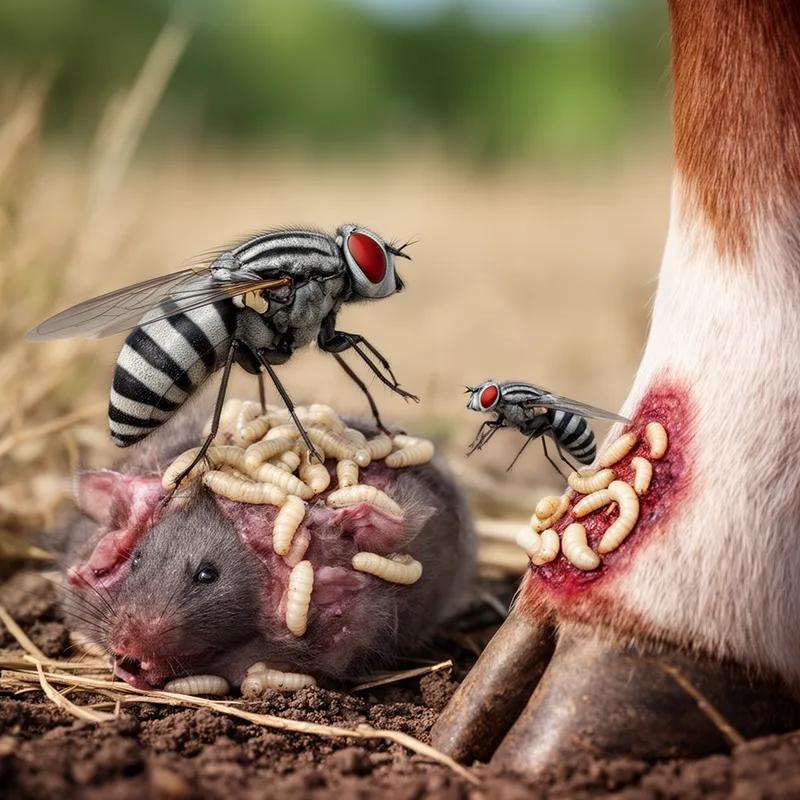
- The larvae of Sarcophaga carnaria are often found on decomposing animal remains.
Examples
-
Biologists studied the behavior of Sarcophaga carnaria to understand its role in decomposition.
-
The Sarcophaga carnaria is commonly found in decaying animal matter.
-
Sarcophaga carnaria can sometimes infest wounds in living animals, causing myiasis.
-
Have you ever seen a Sarcophaga carnaria up close?
-
Sarcophaga carnaria lays its eggs in rotting meat, where the larvae can thrive.
-
The presence of Sarcophaga carnaria on a carcass indicates advanced decomposition.
-
Sarcophaga carnaria larvae help recycle nutrients by breaking down dead animals.
Surface Forms
Morphology
Sarcophaga + carnaria
The binomial is compositional: 'Sarcophaga' denotes a genus of flesh-eating/carrion flies and 'carnaria' derives from Latin root carn- (flesh/carrion), so the species epithet signals association with flesh or carrion. A learner who knows these constituents can directly derive that this refers to a flesh-/carrion-associated fly, so the name is transparent.
Etymology
Sarcophaga carnaria comes from Greek and Latin words: sarco- ('flesh') and -phaga ('eater'), and carnaria ('meat'). This gives a clear image of a fly whose larvae feed on the flesh of dead or injured animals, which is why the name fits today.

