
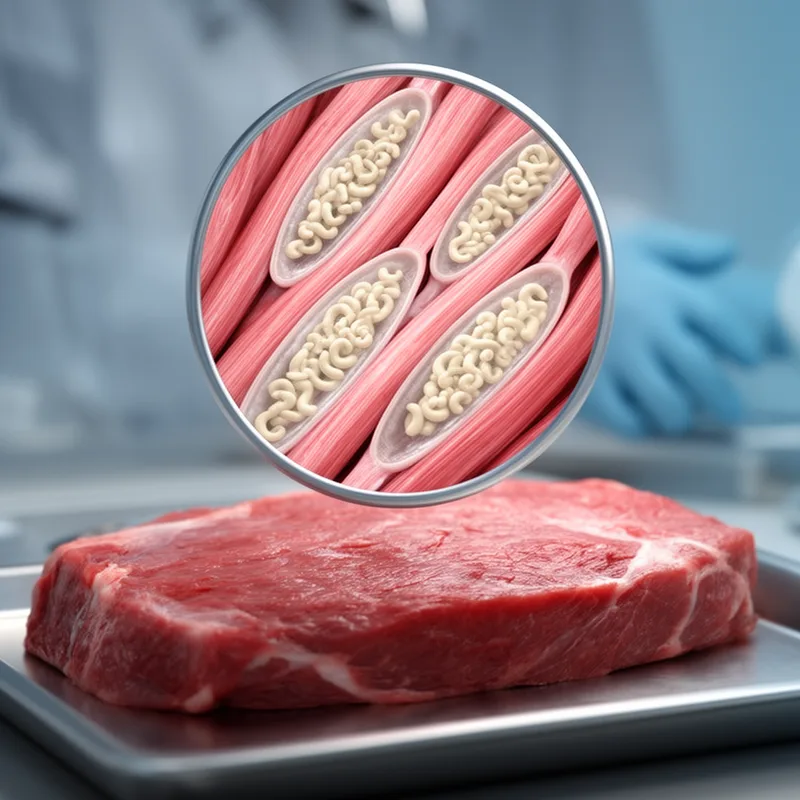
Sarcocystis


 1
9.9
- noun
- /ˌsɑrkoʊˈsɪstɪs/
- Specialized
- Sarcocystis infections can cause significant disease in livestock, leading to economic losses for farmers.
Examples
-
Proper cooking of meat can help prevent transmission of Sarcocystis to humans and other animals.
-
The Sarcocystis parasite can affect livestock health.
-
Scientists identified the presence of Sarcocystis in muscle tissue samples from wild deer.
-
Researchers are studying Sarcocystis in domestic animals.
-
The parasite Sarcocystis is known to cause significant muscle damage in infected animals.
-
Veterinarians often test for Sarcocystis infections in livestock to ensure their health.
-
The life cycle of Sarcocystis involves multiple hosts, primarily including carnivorous mammals.
Surface Forms
Morphology
Sarcocystis = sarcocyst (opaque) = sarco + cyst + is
The name is a specialized taxonomic formation using classical combining forms and a Latin/Greek genus ending; although the components have medical meanings for specialists, the term is not transparently interpretable by an average B1 learner.
Etymology
Sarcocystis comes from Greek parts sarco- meaning 'flesh' and -cystis meaning 'cyst' or 'small sac'. So Sarcocystis are parasites that form cysts in the muscles of animals, and the name literally points to these 'flesh cysts'.