
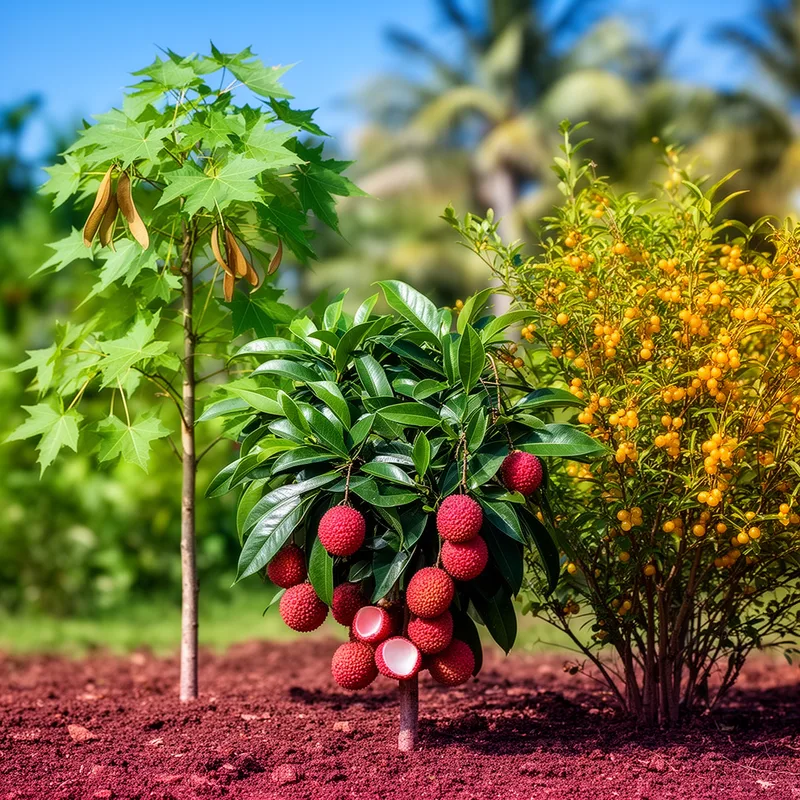
Sapindaceae
- noun
- /sæpɪnˈdeɪʃiˌi/
- Specialized
- The Sapindaceae family includes popular fruits like lychee and rambutan.
Examples
-
Many plants in the Sapindaceae family, such as the horse chestnut, can be toxic if ingested.
-
Trees from the Sapindaceae family often have leathery fruits that are not always edible.
-
So in switching plant families (from Sapindaceae to Caesalpiniaceae), the butterfly has apparently abandoned its original niche.
Academic text (2006)
Synonyms

A group of mostly tropical trees and shrubs like the lychee that produce a soap-like poisonous substance
Surface Forms
Morphology
Sapindaceae = Sapindus (opaque) = sapind + aceae
Formed from a Latin genus name plus the specialized taxonomic suffix '-aceae'; this formation and meaning (botanical family) are specialized and not transparently derivable by an average learner.
Etymology
Sapindaceae comes from the plant name Sapindus, which itself mixes Latin sapo 'soap' and indicus 'of India', and the ending -aceae means 'plant family'. So the name is an easy memory: many plants in this family make 'soap-like' chemicals, which is why it includes soapberry and also familiar trees and fruits like lychee and maple.

