
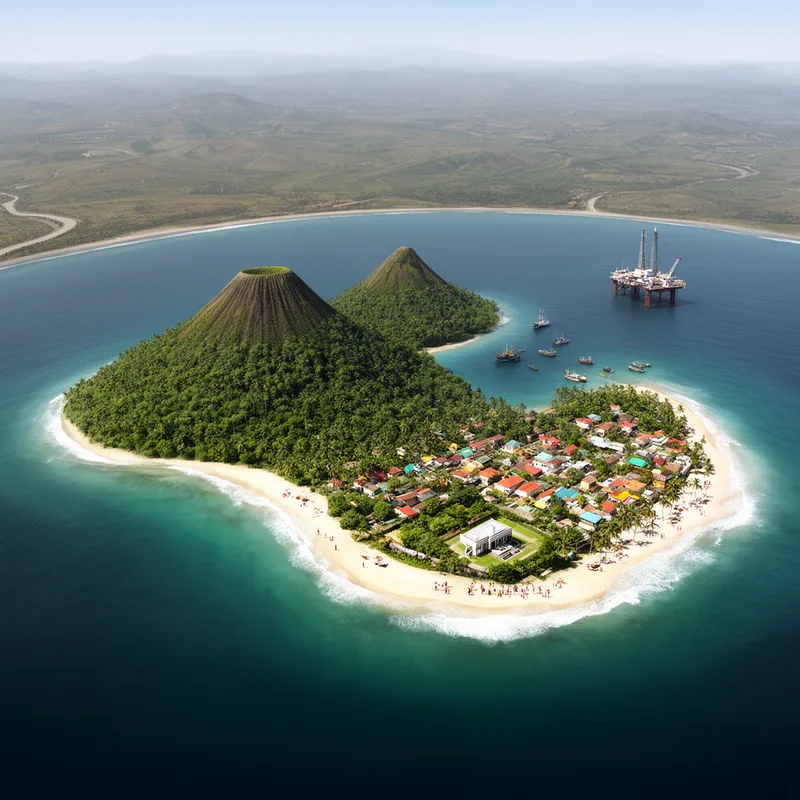
Sao Tome e Principe
- proper noun
- /ˈsaʊ təˈmeɪ ə ˈprɪn.sə.peɪ/
- After gaining independence in 1975, Sao Tome e Principe established its own government.
Examples
-
Many tourists visit Sao Tome e Principe for its unique biodiversity and beautiful beaches.
-
Oil exploration is a growing industry in Sao Tome e Principe.
-
I want to visit Sao Tome e Principe next summer.
-
Have you ever been to Sao Tome e Principe?
-
After gaining independence in 1975, Sao Tome e Principe established its own government.
-
Many tourists visit Sao Tome e Principe for its unique biodiversity and beautiful beaches.
-
Oil exploration is a growing industry in Sao Tome e Principe.
Synonyms

An island country in the South Atlantic off the west coast of Central Africa made of two islands

An island country off the west coast of Africa made of two main islands
Surface Forms
Morphology
Sao + Tome + e + Principe
This is a proper name composed of Portuguese elements (São Tomé e Príncipe) rather than an English compositional phrase; knowing the individual words does not let a B1 learner infer the meaning 'an island nation'. Even if a learner recognized parts like 'São' (Saint) or 'e' (and), that knowledge does not predict the geopolitical meaning without prior exposure to the toponym.
Etymology
Sao Tome e Principe comes from the two island names Sao Tome and Principe and means 'Saint Thomas and the Prince' in Portuguese. One popular story says Portuguese sailors found Sao Tome on Saint Thomas's day and named the other island Principe to honor a prince, so the country name simply joins those island names.

