
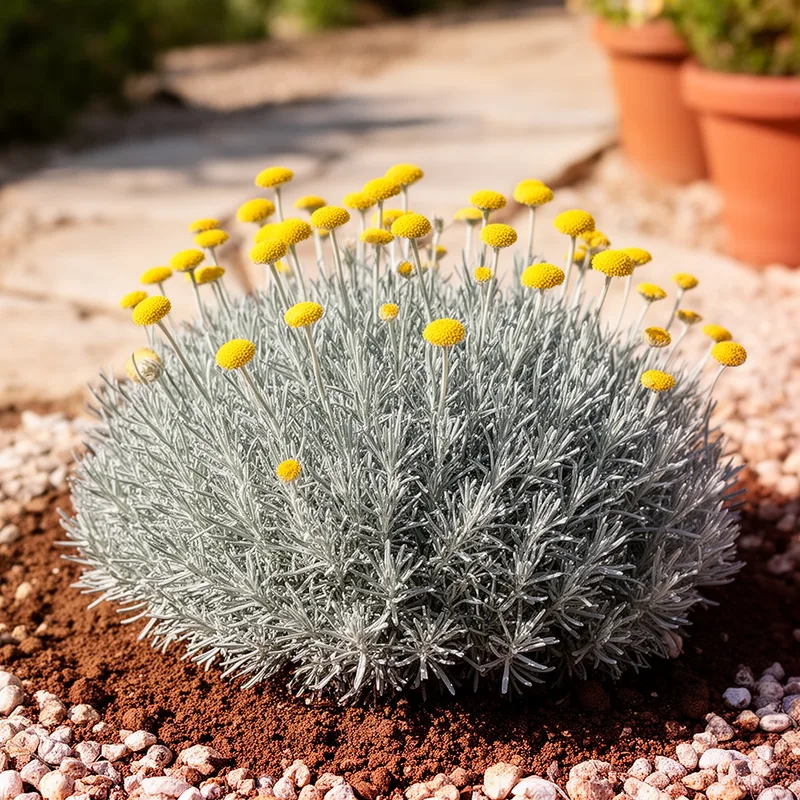
Santolina chamaecyparissus
- noun
- Specialized
- The gardener planted Santolina chamaecyparissus along the edge for its attractive yellow blooms and silvery foliage.
Examples
-
Santolina chamaecyparissus thrives in well-drained soil and full sunlight, making it a popular choice for Mediterranean-style gardens.
-
Dried Santolina chamaecyparissus leaves are sometimes used in potpourri for their gentle fragrance.
-
The Santolina chamaecyparissus thrives in dry, sunny areas.
-
Many gardeners prefer Santolina chamaecyparissus for its aromatic foliage.
-
Santolina chamaecyparissus is often used in gardens for its aromatic leaves and bright yellow flowers.
-
In Mediterranean climates, Santolina chamaecyparissus grows well in sandy soil and full sun.
-
Gardeners appreciate Santolina chamaecyparissus for its low water needs and fragrant, woolly foliage.
Synonyms

A scented shrub with woolly leaves and small yellow flowers used in gardens
Surface Forms
Morphology
Santolina + chamaecyparissus
This is a Latin binomial (scientific) name serving as an arbitrary label for a particular shrub rather than a compositional English phrase. The second element 'chamaecyparissus' is not a recognizable English word and the full name does not permit a B1 learner to infer the plant's properties from its constituents, so the meaning is not derivable from the parts.
Etymology
Santolina chamaecyparissus combines two name parts: Santolina, the group name, and chamaecyparissus, a word that means 'low cypress' because the plant's small, silvery leaves and shape look like a tiny cypress close to the ground. That's why the name fits this low, woolly shrub often called 'cotton lavender'.

