
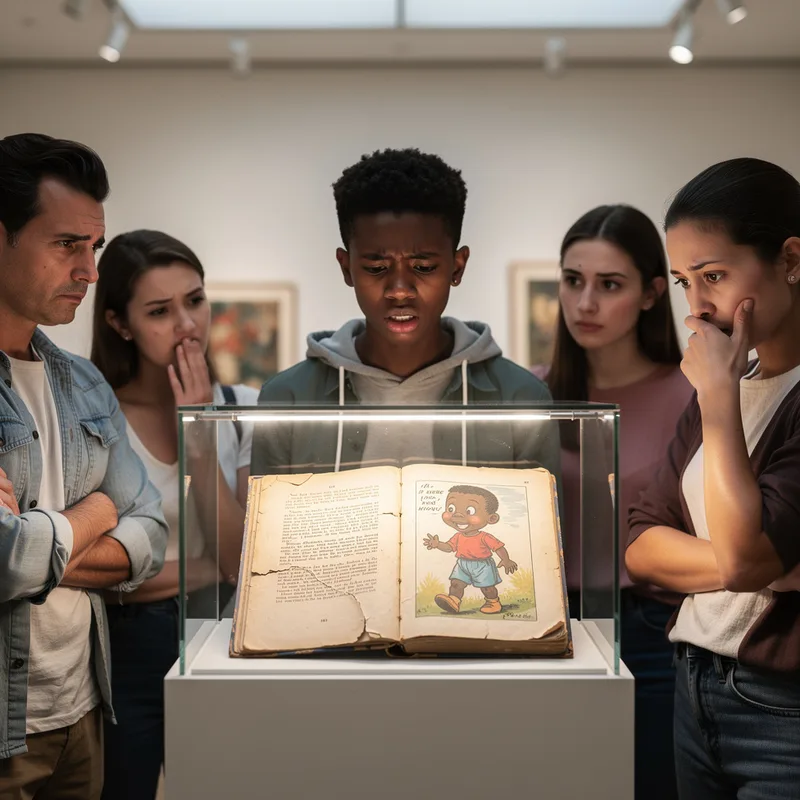
Sambo
 2
9.9

- noun
- /ˈsæmboʊ/
- Slur
- Phyllis J. Yuill explores the history of the controversy in Little Black Sambo: A Closer Look (1976).
- Little Sambo
- Black Sambo
Loading YouTube…
Watch on YouTubeIt was the black Sambo beggar, always grinning broadly with those white teeth and a big red lips.
- It was the black Sambo beggar, always grinning broadly with those white teeth and a big red lips.
Examples
-
A common manifestation of the servile and docile Sambo was his penchant for avoiding work, a character flaw that would permanently stigmatize both the slaves and the free Black population.
Academic text (2004) -
The archives of the ACS are also speckled with references to the Sambo stereotype.
Academic text (2004) -
Inside was a copy of The Story of Little Black Sambo, who tried to escape the mouths of tigers by giving them his beautiful clothes.
Fiction book (1998) -
An African American person speculated that "Little Black Sambo" was a racist book against African Americans.
Blog text (4) -
It was the black Sambo beggar, always grinning broadly with those white teeth and a big red lips.
-
Yet the US pedigree of "sambo" depictions was by no means limited to the bona fide cartoon genre.
Academic text (1999) -
In discussions about racial stereotypes, the term Sambo is often referenced as a profoundly offensive caricature.
-
The book 'Little Black Sambo' has been criticized for its perpetuation of racist stereotypes.
-
Many educators avoid using the character Sambo in teaching due to its offensive implications in American culture.
Surface Forms
Etymology
Sambo likely comes from the Spanish and Portuguese word zambo, which long ago was used in the Americas for people of mixed African and Native American background and could also mean 'bow-legged'. Over time English speakers used Sambo as the name for an exaggerated, mocking character of Black people, so the word is now seen as highly offensive and racist.