
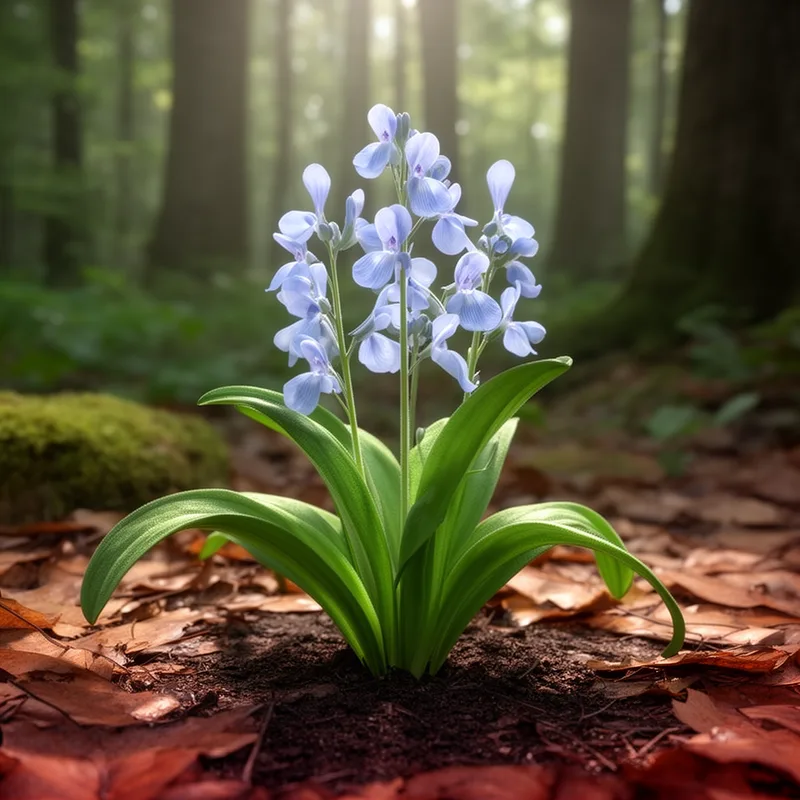
Salvia lyrata
- noun
- Specialized
- Gardeners often plant Salvia lyrata for its attractive blue flowers and unusual foliage.
Examples
-
The Salvia lyrata thrives in moist woodlands across the southeastern United States.
-
The Salvia lyrata blooms beautifully in spring.
-
Researchers are studying the potential medicinal uses of Salvia lyrata in traditional remedies.
-
Did you see the Salvia lyrata in the garden?
-
Gardeners often plant Salvia lyrata for its attractive blue flowers and unusual foliage.
-
The Salvia lyrata thrives in moist woodlands across the southeastern United States.
-
The Salvia lyrata blooms beautifully in spring.
Surface Forms
Morphology
salvia + lyrata
The first element 'Salvia' is the common genus name (sage) and 'lyrata' corresponds to the Latin adjective meaning 'lyrate' (lyre-shaped), so a learner who knows both constituents could infer 'a sage with lyre-shaped leaves.' However, because this is a taxonomic Latin binomial (a species name) and requires domain knowledge about scientific naming and the Latin adjectival form, the exact interpretation as a specific plant species is not fully predictable to a general B1 learner.
Etymology
Salvia lyrata comes from old Latin words: Salvia means 'sage' and lyrata means 'lyre-shaped'. So the name gives a simple picture — a sage plant with leaves shaped like a small lyre, which helps you remember what the plant looks like.

