

Salix tristis
- noun
- Specialized
- The leaves of Salix tristis are distinctively long and narrow, with a pale, canescent underside.
Examples
-
The Salix tristis commonly grows along sandy ridges and dry upland clearings in the eastern United States.
-
Many gardeners prefer Salix tristis for its drought resistance.
-
Botanists studied the adaptive features of Salix tristis in drought-prone habitats.
-
The Salix tristis thrives in dry environments.
-
The Salix tristis is often found in dry areas, showcasing its ability to adapt to drought conditions.
-
With its long, narrow leaves, the Salix tristis stands out among other shrubs in its native range.
-
In the eastern United States, the Salix tristis is valued for its resilience in arid environments.
Synonyms
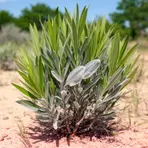
A small willow bush in the eastern United States with long narrow leaves that are gray and hairy underneath
Surface Forms
Morphology
Salix + tristis
This is a scientific Latin binomial (genus + species) functioning as a taxonomic label rather than a compositional English phrase. The second element 'tristis' has no English dictionary definition here, and even if a learner knew it as Latin for 'sad' that would not allow them to derive the botanical species meaning from the parts, so a B1 learner would not be able to infer the meaning.
Etymology
Salix tristis comes from Latin: Salix means 'willow' and tristis means 'sad' or 'dull'. That's because this willow has long, narrow leaves with a pale, gray underside, so the name points to the plant's dull-looking leaves.

