

SPL
- noun
- Specialized
- All auditory stimuli were calibrated to 65 dBA SPL at 0.5 meters from the speaker, where the participant would be seated.
- dB SPL
- 85 SPL
- 90 dB SPL
Examples
-
Increasing the level of the test signal above 70 dB SPL results in increased distortion.
Academic text (1990) -
For each speaker and condition, a measure of average intensity was determined by averaging SPL across all runs.
Academic text (2012) -
The panel on the left illustrates the audiogram described in SPL values at the eardrum.
Academic text (1993) -
The response of a two-channel compression hearing aid to the 85 dB SPL tone burst is shown in Figure 16.
Academic text (1990) -
The resultant signal had an RMS level of 85 dB SPL and a crest factor of 6 dB.
Academic text (1990) -
Listeners passed hearing screening tests at 20 dB SPL for the octave frequencies of 250 Hz through 8000 Hz.
Academic text (2012) -
The technician measured the SPL of the concert to ensure it did not exceed safe levels for the audience.
-
Sound pressure levels are often expressed in SPL, allowing for consistent comparisons between different audio sources.
-
During the experiment, the SPL was recorded at various frequencies to analyze the effect on human hearing.
Synonyms
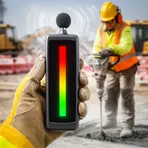
A measure of how loud a sound is in decibels
How Loud


Surface Forms
Morphology
SPL = S + P + L
This is an initialism (sound pressure level); the letters themselves do not convey the meaning unless the expansion is known, so learners cannot derive the meaning from the components.
Etymology
SPL is short for sound, pressure, level, and it measures 'loudness' in decibels. Think of 'pressure' as a push of air on your ear and 'level' as how strong that push is, so SPL tells you how loud a sound is.