
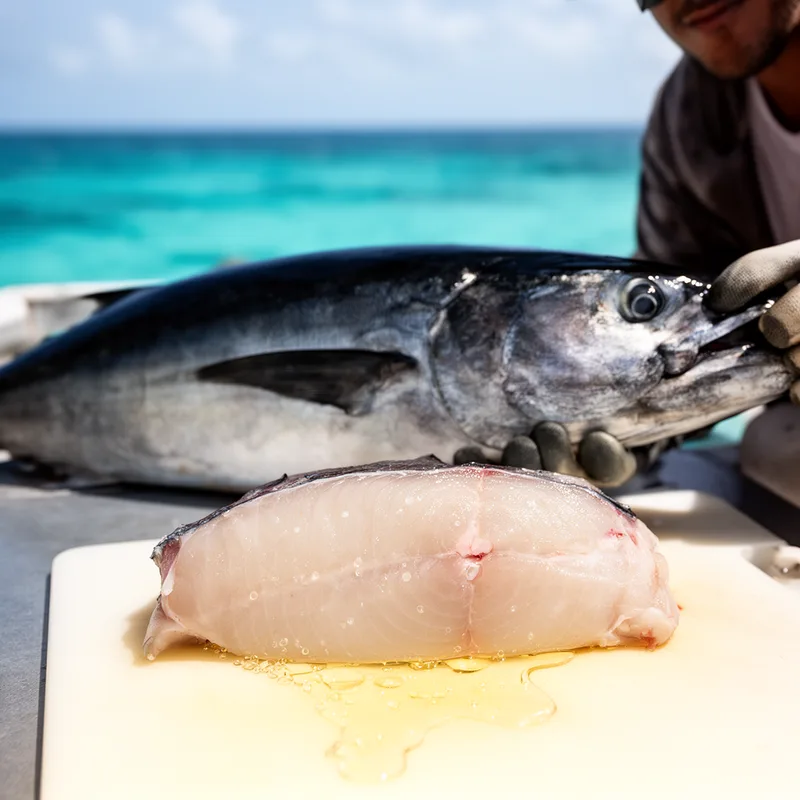
Ruvettus pretiosus
- noun
- Specialized
- Fishermen sometimes catch Ruvettus pretiosus in deep tropical waters.
Examples
-
Eating Ruvettus pretiosus can cause digestive discomfort due to its high oil content.
-
The Ruvettus pretiosus is often mistaken for other large, oily fish in restaurants.
-
The Ruvettus pretiosus is known for its rich oil content.
-
Many fishermen target Ruvettus pretiosus for its unique flavor.
-
Many fishermen target Ruvettus pretiosus because it is a valuable catch in tropical seas.
-
The Ruvettus pretiosus is a large fish commonly found in deep waters around coral reefs.
-
Eating Ruvettus pretiosus is popular in some cultures due to its distinctive taste and texture.
Synonyms


 1
8.2
A long thin fish that lives in deep warm seas and eats other fish
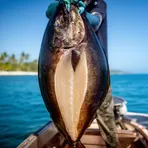
A very large deep sea fish with oily flesh found in warm oceans

A long, thin sea fish with rich, oily flesh like a mackerel

A tropical fish that eats other fish, with a long body, strong jaws and sharp teeth

A group of long, thin sea fish that eat other fish

A family of long sea fish called snake mackerels that eat other fish and live in deep water
Surface Forms
Morphology
Ruvettus + pretiosus
This is a Latin binomial (scientific species name) functioning as a proper noun; its constituents are non‑English and listed as not found in the dictionary, so they do not yield a compositional English meaning. Even learners who recognised the Latin-looking elements would not be able to derive 'a very large deep-water snake mackerel' from them, so the sense is not predictable from the parts.
Etymology
Ruvettus pretiosus probably comes from a scientist's name and the Latin word pretiosus, which means 'precious' or 'valuable'. Fishermen may have called this large, oily deep-water fish 'precious' for its rich oil, so the name helps you remember it is a big, oily fish often called the 'oilfish'.