

Ruta graveolens
- noun
- Specialized
- Have you ever tried Ruta graveolens in your cooking?
Examples
-
Some gardeners plant Ruta graveolens to deter pests because of its strong scent.
-
Contact with Ruta graveolens can cause skin irritation in sensitive individuals.
-
The leaves of Ruta graveolens were once widely used as a medicinal herb.
-
I added Ruta graveolens to my herbal tea for flavor.
-
In traditional medicine, Ruta graveolens is often used to treat various ailments.
-
The chef added Ruta graveolens to the dish to enhance its flavor with its bitter leaves.
-
Gardeners sometimes grow Ruta graveolens for its strong scent and insect-repelling properties.
Synonyms

 2
9.6
2
9.6

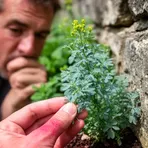
An herb with a strong smell and bitter leaves that can irritate the skin

 1
9.9
1
9.9
A small European plant with strong, bitter-smelling leaves that may irritate skin
Surface Forms
Morphology
Ruta + graveolens
This is a scientific Latin binomial rather than an English compositional phrase: 'Ruta' is a genus name and 'graveolens' is a Latin epithet (not a familiar English word), so a B1 learner knowing English vocabulary would not be able to derive the meaning 'a strong-scented perennial herb' from the constituents. Botanical Latin names are lexicalized and language-specific, requiring prior botanical knowledge or translation rather than being transparently built from known English words.
Etymology
Ruta graveolens comes from Latin words: Ruta was the old name for the plant 'rue' and graveolens means 'strong-smelling'. So the name points to a bitter, strong-scented herb that people used in cooking and medicine and that can irritate the skin.