
Russki tradition
- noun
 :
tradición rusa
:
tradición rusa
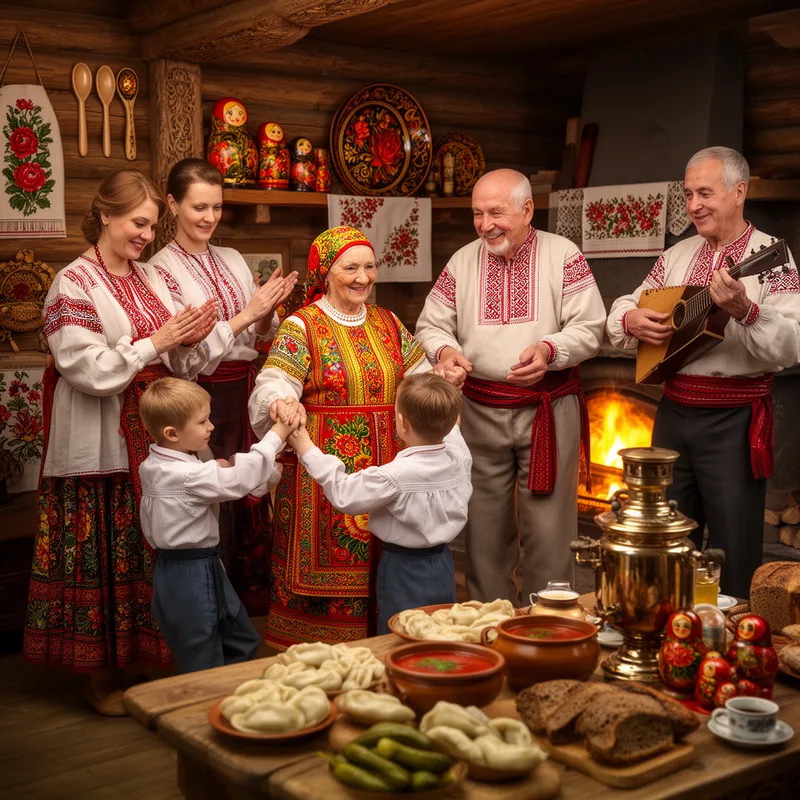
- Many Russki traditions are celebrated with music, dance, and hearty meals.
Examples
-
Her wedding incorporated several Russki traditions handed down through generations.
-
The Russki tradition of celebrating Maslenitsa is quite popular.
-
He studied the influence of Russki tradition on contemporary folk art.
-
Many people admire the Russki traditions during the New Year celebrations.
-
Her wedding incorporated several Russki traditions handed down through generations.
-
Many Russki traditions are celebrated with music, dance, and hearty meals.
-
The Russki tradition of celebrating Maslenitsa is quite popular.
How Traditional


Surface Forms
Morphology
Russki + tradition
If a learner knows the constituent meanings (i.e. that 'Russki' denotes 'Russian' and 'tradition' means customary practices), the noun phrase is compositionally transparent: an adjective of nationality plus 'tradition' naturally yields 'Russian tradition'. Although 'Russki' is a non‑standard transliteration in English, the adjective+noun pattern is cross-linguistically common and therefore immediately interpretable by a B1 learner who knows both words.
Etymology
Russki tradition uses Russki, a familiar form of the word 'Russian', and makes you think of village scenes where grandparents teach songs, recipes and rituals to children, and tradition means what is passed down. That's why Russki tradition means 'the traditional customs and practices of Russian culture'.