
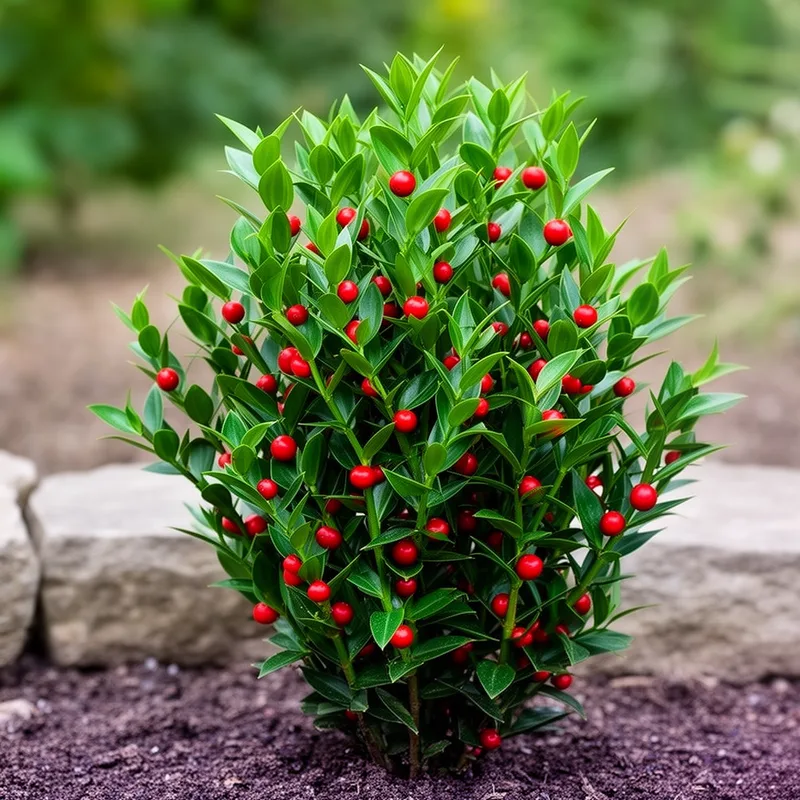
Ruscus aculeatus
- noun
- Specialized
- The tough stems of Ruscus aculeatus were once used to make brooms by butchers.
Examples
-
Ruscus aculeatus is often planted in gardens for its evergreen foliage and decorative berries.
-
Traditional herbal medicine sometimes uses extracts from Ruscus aculeatus.
-
The Ruscus aculeatus is often used in traditional medicine.
-
Have you seen a Ruscus aculeatus plant before?
-
Ruscus aculeatus is often grown in gardens for its striking appearance and ability to withstand drought.
-
The stems of Ruscus aculeatus are traditionally harvested for making durable brooms used by butchers.
-
In Europe, Ruscus aculeatus is commonly used in landscaping due to its attractive evergreen leaves.
Synonyms

A low shrub with flat stems that look like leaves and red berries
Surface Forms
Morphology
Ruscus + aculeatus
This scientific binomial is compositional: the genus name Ruscus combined with the Latin epithet aculeatus (literally 'spiny' or 'bearing prickles') yields 'spiny Ruscus', which matches the shrub description. If a learner knows both constituents they can transparently derive the meaning, although in practice the Latin epithet is unlikely to be known by B1 learners without exposure.
Etymology
Ruscus aculeatus is better known as butcher's-broom because its stiff, flat stems were once used by butchers as small brooms to sweep stalls and clean meat. So the clear image of a stem acting like a broom helps explain why people call it 'butcher's broom' today.

