
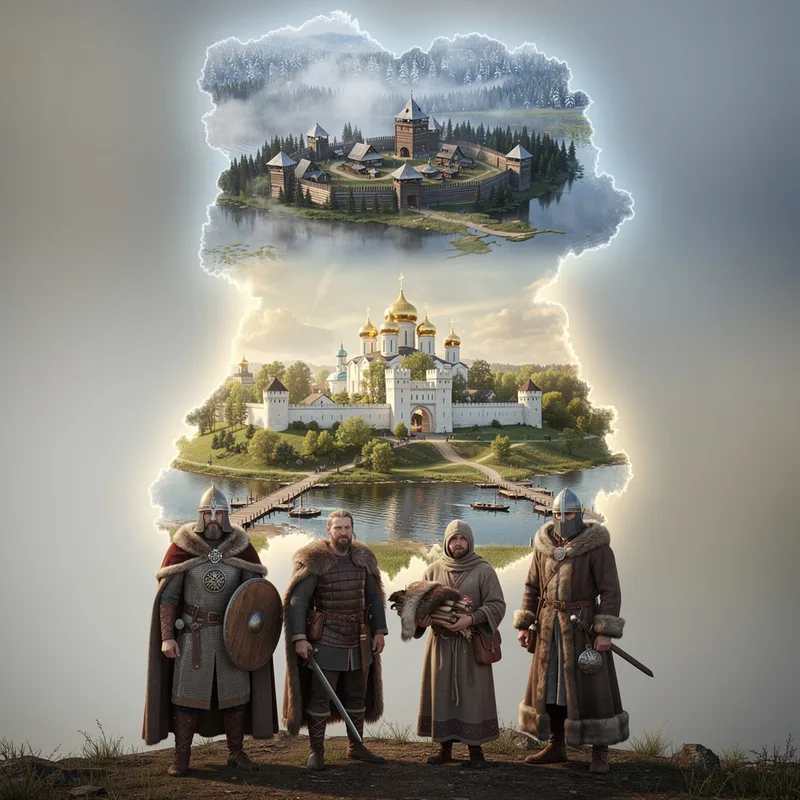
Rus
 2
9.9

- proper noun
- The Rus was the early predecessor to the modern-day nations of Belarus, Russia, and Ukraine.
- Kievan Rus
Examples
-
As it absorbed other eastern Rus territories, it reclaimed the old name in its Greek form, Rusia.
-
How are we to explain these two conflicting accounts about the Rus?
Academic text (2005) -
The same story, then, is told about the latter group of Rus with one small additional piece of information.
Academic text (2005) -
This in turn meant that the gap between the Rus centre and left was getting wider.
-
And yes, he had plans, plans to unite all of Rus under his rule.
Fiction book (1990) -
Of all the Suzdalians, in fact, of all the Rus, he alone could communicate with them.
Fiction book (1990) -
The narrator, however, does not comment on the good or bad traits of the Rus and leaves the judgment to his readers.
Academic text (2005) -
The tsars needed the pedigree of Kievan Rus; the war is the story of the triumph of the Communist state.
Academic text (2008) -
Because of this event, Chersonesos is often referred to as the "cradle of Rus Eastern Slavic Orthodoxy."
Academic text (2002) -
The church celebrated the 1,000th anniversary of the baptism of Rus, the country's conversion to Christianity, in 1988.
Synonyms
A state of Slavic people in Eastern Europe during the Middle Ages centered in Kiev
Surface Forms
Etymology
The word Rus likely comes from an old name for 'rowers' — the Viking traders from Sweden who travelled the rivers, and the Finnish name for Sweden, Ruotsi, keeps this connection. So Rus became the name for the people and the early medieval state in Eastern Europe.