
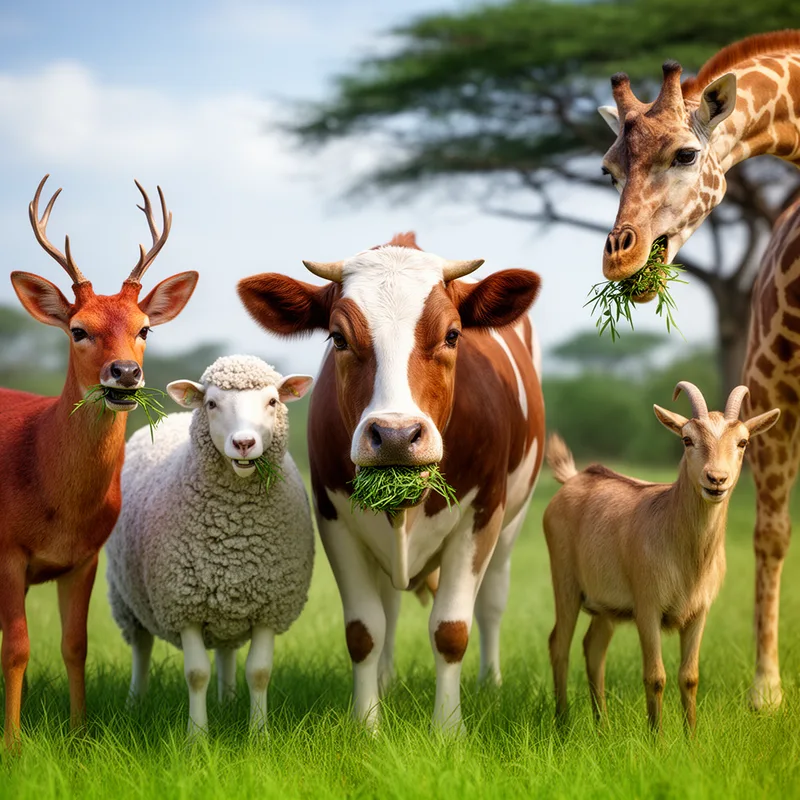
Ruminantia
- noun
- /ˌruːmɪˈnænʃə/
- Specialized
- The Ruminantia suborder includes animals like cows and goats.
Examples
-
The Ruminantia include animals such as deer, antelopes, and giraffes that are known for chewing cud.
-
The Ruminantia are distinguished by their complex, multi-chambered stomachs.
-
Giraffes, included in the Ruminantia, have evolved long necks for feeding on tall trees.
-
The digestive system of the Ruminantia allows them to extract nutrients from tough plant material.
-
Many species of Ruminantia are found in Africa.
-
Cattle are part of the Ruminantia, which are mammals with specialized stomachs for digesting tough plant materials.
-
The Ruminantia represent a diverse group of mammals, including goats and camels, that have adapted to various habitats.
Surface Forms
Etymology
Ruminantia comes from the Latin ruminare, which means 'to chew the cud', and it shares the same root as the English verb ruminate, used for 'thinking slowly' because of the slow chewing image. So, Ruminantia are the animals that 'chew the cud' and have many-chambered stomachs.

