
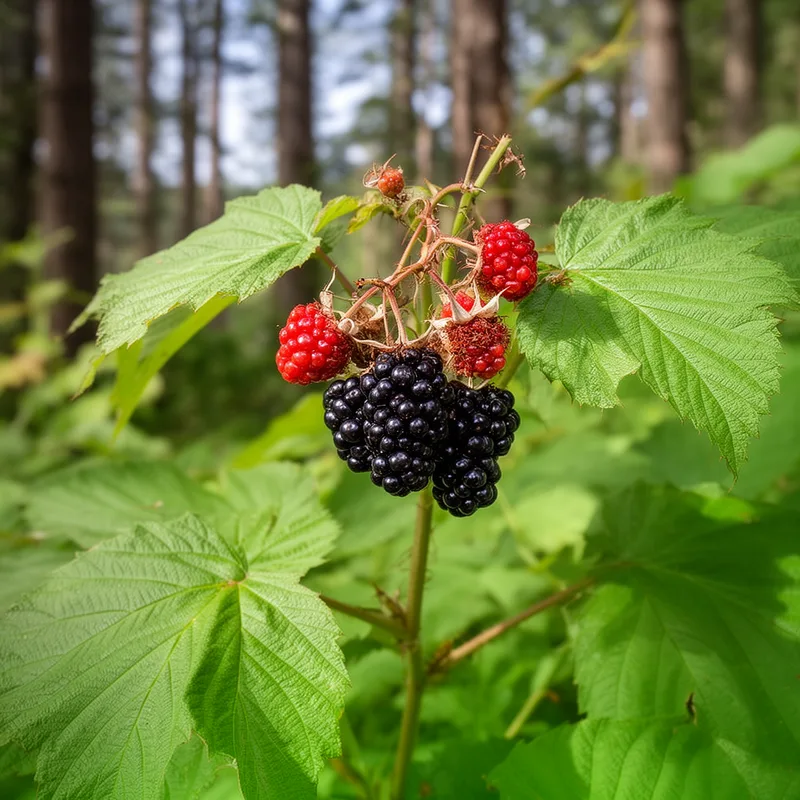
Rubus ursinus
- noun
- /ˈruːbəs ˈɜːrsaɪnəs/
- Specialized
- Gardeners in the Pacific Northwest often cultivate Rubus ursinus for its flavorful fruit.
Examples
-
I picked some fresh Rubus ursinus from the garden.
-
Wild bears and other animals are known to feed on the berries of Rubus ursinus during summer.
-
Rubus ursinus produces some of the sweetest blackberries native to North America.
-
The Rubus ursinus bushes grow wild in this area.
-
Gardeners in the Pacific Northwest often cultivate Rubus ursinus for its flavorful fruit.
-
Wild bears and other animals are known to feed on the berries of Rubus ursinus during summer.
-
Rubus ursinus produces some of the sweetest blackberries native to North America.
Synonyms
 10
1.0
10
1.0

A bush with sharp stems that grows small sweet black fruits
 1
1.3
1
1.3
A bush with thorny stems that makes sweet dark berries you can eat

 1
5.7
1
5.7
A wild prickly bush with blackberries you can eat
A wild blackberry bush with long black fruit that grows in western North America

A wild bush that produces long black berries and grows in western North America
Surface Forms
Morphology
Rubus + ursinus
This is a Latin binomial taxonomic name: 'Rubus' is a capitalized genus label and 'ursinus' is not a common English word (no dictionary gloss provided), so a B1 learner knowing the surface forms would not be able to derive the specific meaning 'a North American species of blackberry'. Taxonomic Latin functions as an arbitrary label rather than a compositional English phrase, requiring specialist knowledge, so the expression is not transparently interpretable.
Etymology
Rubus ursinus comes from Latin words: rubus meaning 'bramble' or 'blackberry' and ursinus meaning 'of bears'. Because wild bears eat these sweet berries, the name gives a clear image — a 'bear's blackberry' — and so it refers to this species.