
Rubus spectabilis
- noun
- Specialized
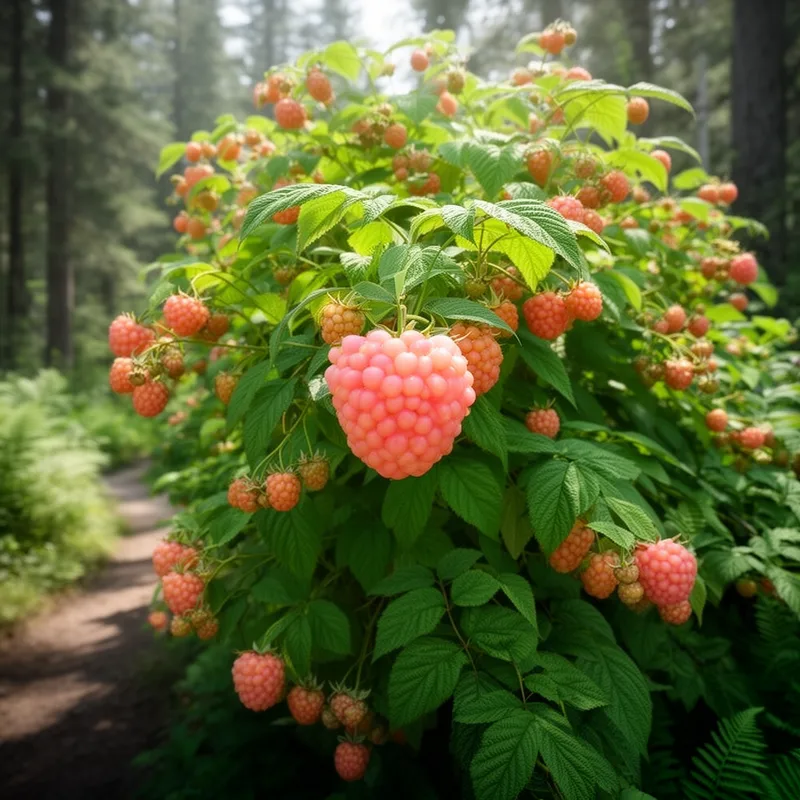
- Hikers often spot Rubus spectabilis due to its distinctive pinkish-orange berries.
Examples
-
The Rubus spectabilis blooms brightly along the forest edges in early spring.
-
Researchers studied the nutritional value of Rubus spectabilis in indigenous diets.
-
The Rubus spectabilis blooms beautifully in the spring.
-
Have you seen the Rubus spectabilis in the garden?
-
Hikers often spot Rubus spectabilis due to its distinctive pinkish-orange berries that stand out in the wild.
-
The flowers of Rubus spectabilis add a vibrant splash of color to the landscape during the spring season.
-
In North America, Rubus spectabilis is commonly seen growing in thickets and along trails.
Surface Forms
Morphology
Rubus + spectabilis
This is a Latin binomial taxonomic name rather than a compositional English phrase; the words function as a conventional label and do not transparently convey the descriptive meaning. The second element 'spectabilis' is not given as a known English word and even knowing 'Rubus' as a genus does not allow a B1 learner to infer the species' appearance or that it is a raspberry, so the meaning is not derivable from the parts.
Etymology
Rubus spectabilis may come from two Latin words: rubus meaning 'bramble' and spectabilis meaning 'showy'. So the name describes a 'showy bramble', a tall raspberry plant with bright flowers and pinkish-orange berries.

