

Rubus parviflorus
- noun
- Specialized
- The white flowers of Rubus parviflorus attract a variety of pollinators in early summer.
Examples
-
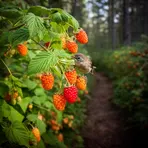
The Rubus parviflorus produces sweet, thimble-shaped orange berries that are a favorite among wildlife.
-
The Rubus parviflorus grows abundantly in moist woodlands throughout the Pacific Northwest.
-
Native Americans traditionally used Rubus parviflorus for both food and medicinal purposes.
-
The Rubus parviflorus is commonly found in forested areas.
-
Do you know about Rubus parviflorus?
-
In the Pacific Northwest, the Rubus parviflorus can be seen thriving in shady, moist woodlands.
-
The pale white flowers of Rubus parviflorus bloom in spring, signaling the arrival of warmer weather.
Synonyms
 1
8.1
1
8.1

A bush with small orange or red berries that you can eat, like raspberries

A wild bush that grows small orange berries like raspberries

A bush that produces soft red berries like raspberries
Surface Forms
Morphology
Rubus + parviflorus
This is a Latin binomial: 'Rubus' indicates the taxonomic genus (a bramble/raspberry), so a learner who knows that constituent can infer it names a plant species. However, 'parviflorus' is a Latin adjective not listed in the dictionary here (meaning 'small‑flowered'), so a B1 learner would not predict the specific descriptive sense; the name therefore partly signals category but not the detailed meaning.
Etymology
Rubus parviflorus comes from Latin words: Rubus means 'bramble' or berry bush and parviflorus means 'small-flowered'. The name matches the plant's look—a bramble with small white flowers and thimble-shaped berries—so the name helps you remember what the plant looks like.