
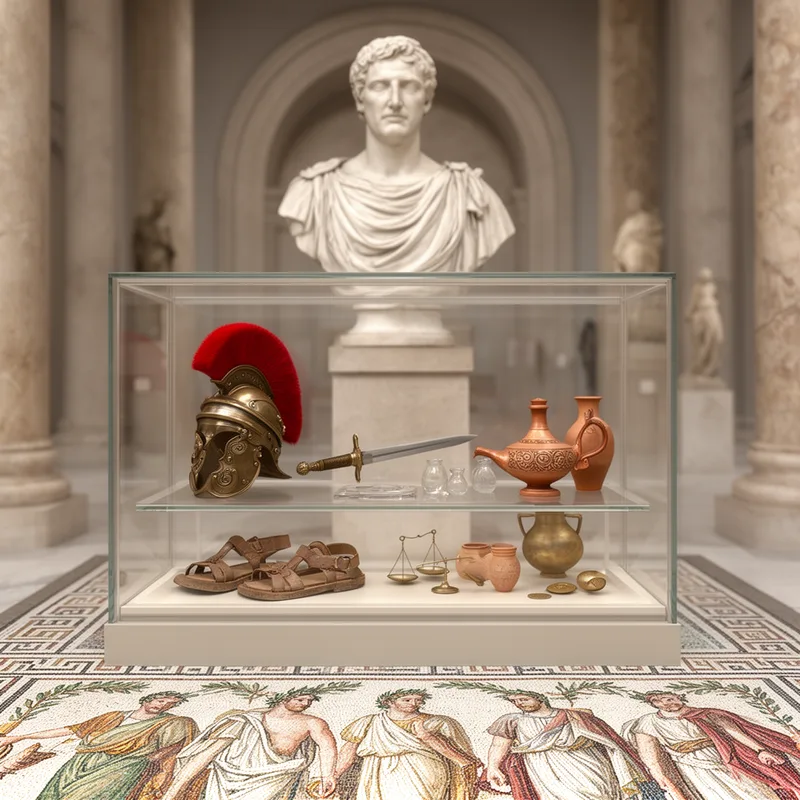
Romanic
7.7
Relating to ancient Rome, its people, and its culture
- adjective
- /roʊˈmænɪk/
:
romano
- The art museum features a special exhibit dedicated to Romanic sculptures from the ancient period.
Examples
-
Many scholars study Romanic languages to better understand the evolution of European cultures.
-
The architecture of the ancient temple showcases a distinct Romanic style that draws visitors from around the globe.
-
"Reflexions sur les Lettres Persanes." Romanic Review 74 (1983): 306-15. Rev. NA (1989).
Academic text (1997)
Synonyms



Surface Forms
Romanic positive
Morphology
Etymology
Romanic comes from the Latin word Romanicus, which means 'of Rome' or 'Roman'. So Romanic is used for things that come from or are like ancient Rome, for example law, art, or buildings.