
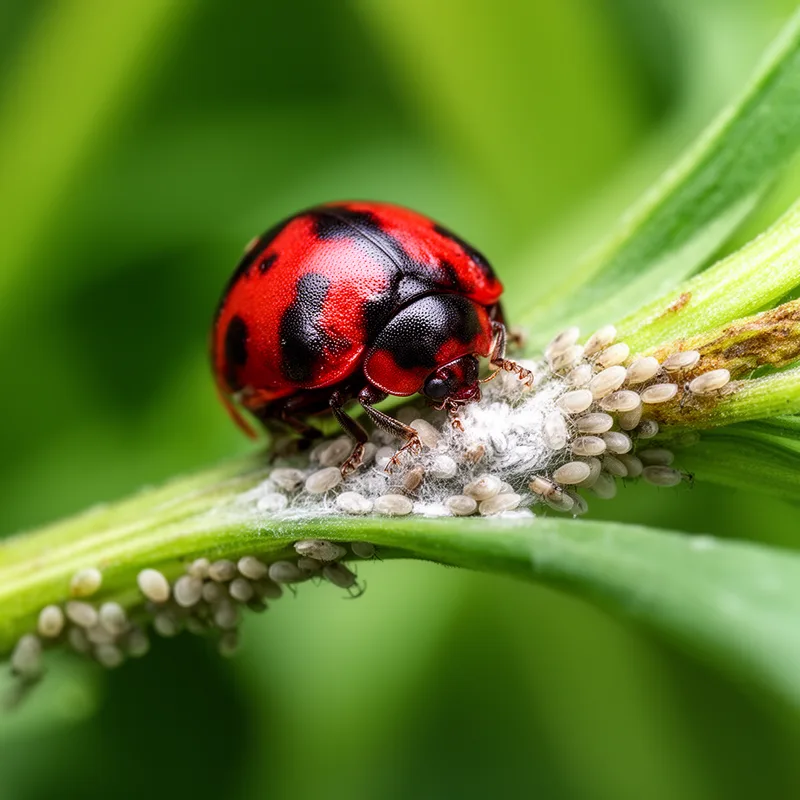
Rodolia cardinalis
- noun
- Specialized
- Rodolia cardinalis was introduced to California in the 19th century to control cottony cushion scale.
Examples
-
Farmers often release Rodolia cardinalis to manage scale insect populations.
-
The success of Rodolia cardinalis demonstrates the benefits of biological pest control.
-
Farmers often rely on Rodolia cardinalis as a natural alternative to chemical pesticides.
-
The Rodolia cardinalis is known for its effectiveness in pest control.
-
Rodolia cardinalis was introduced to California in the 19th century to control cottony cushion scale.
-
Farmers often rely on Rodolia cardinalis as a natural alternative to chemical pesticides.
-
The success of Rodolia cardinalis demonstrates the benefits of biological pest control.
Synonyms
A small beetle that eats scale insects on plants to protect crops
Surface Forms
Morphology
Rodolia + cardinalis
This is a Linnaean binomial composed of a genus name + specific epithet; if a learner knows 'Rodolia' as a genus of ladybugs and understands that two-word Latin names label species, they can infer that 'Rodolia cardinalis' refers to a particular species of Rodolia (a kind of ladybird beetle). The specific epithet 'cardinalis' is merely the species label (often descriptive) and does not prevent the overall taxonomic meaning from being transparently derived from the constituents.
Etymology
Rodolia cardinalis likely gets its name from how it looks and from a scientist's name: cardinalis means 'red', because this little ladybird is bright red, and Rodolia was a genus name chosen by scientists, probably to honour a person. That's why the name helps you remember a small red beetle that eats pest insects.

