
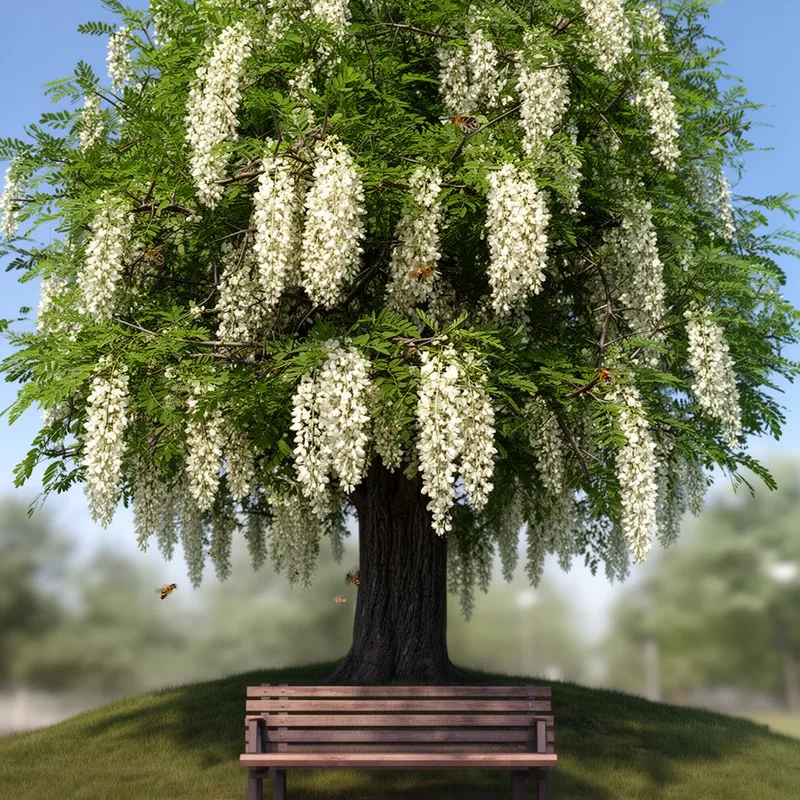
Robinia pseudoacacia
- noun
- /roʊˈbɪniə ˌsuːdoʊəˈkeɪʃə/
- Specialized
- Many bees are attracted to the fragrant flowers of Robinia pseudoacacia in early summer.
Examples
-
In the park, a towering Robinia pseudoacacia cast a pleasant shade over the benches.
-
Farmers often plant Robinia pseudoacacia to prevent soil erosion and provide windbreaks.
-
The Robinia pseudoacacia is often used as an ornamental tree.
-
Many gardeners prefer Robinia pseudoacacia for its beautiful flowers.
-
The black locust (Robinia pseudoacacia) is often planted for its beautiful white flowers in the summer.
-
In many parks, you can find the black locust tree (Robinia pseudoacacia) attracting bees with its fragrant blooms.
-
The robust black locust (Robinia pseudoacacia) is known to thrive in various soil types and climates.
Synonyms
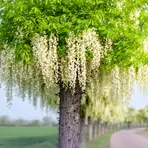
A large thorny tree with hanging clusters of fragrant white flowers
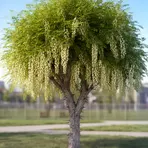
A large tree with thorns, many small leaves on each branch, and hanging white flowers
Surface Forms
Morphology
Robinia + pseudoacacia
This is a Latin binomial (a scientific species name) and functions as a proper noun for a specific tree; knowing the surface constituents does not let a B1 learner infer the full meaning because 'Robinia' is a genus name and 'pseudoacacia' is not a common English word. Although the parts derive from classical roots (pseudo- = false, acacia = a tree), recognizing those requires etymological knowledge beyond B1, so the overall expression is not predictable from its parts.
Etymology
Robinia pseudoacacia was named after the Robin family, gardeners who planted it in France after they brought it from North America. The second part, pseudoacacia, means 'false acacia' because its flowers and leaves look like a true acacia, so the name helps you remember it is a different but similar tree.

