
Rickettsiales


 1
9.9
- noun
- /rɪˈkɛtʃiˌeɪliz/
- Specialized
- Rickettsiales are responsible for several serious diseases, including typhus and Rocky Mountain spotted fever.
Examples
-
Because many Rickettsiales are obligate intracellular parasites, they are difficult to culture in the lab.
-
The Rickettsiales order includes several pathogenic bacteria.
-
The laboratory specializes in the identification and study of Rickettsiales bacteria.
-
Are Rickettsiales responsible for any diseases?
-
Rickettsiales are an order of bacteria known to cause diseases such as typhus and Rocky Mountain spotted fever.
-
Research on Rickettsiales reveals their role as pathogenic organisms in both humans and animals.
-
The study of Rickettsiales is crucial for understanding their impact on public health due to their disease-causing abilities.
Synonyms
 1
9.9
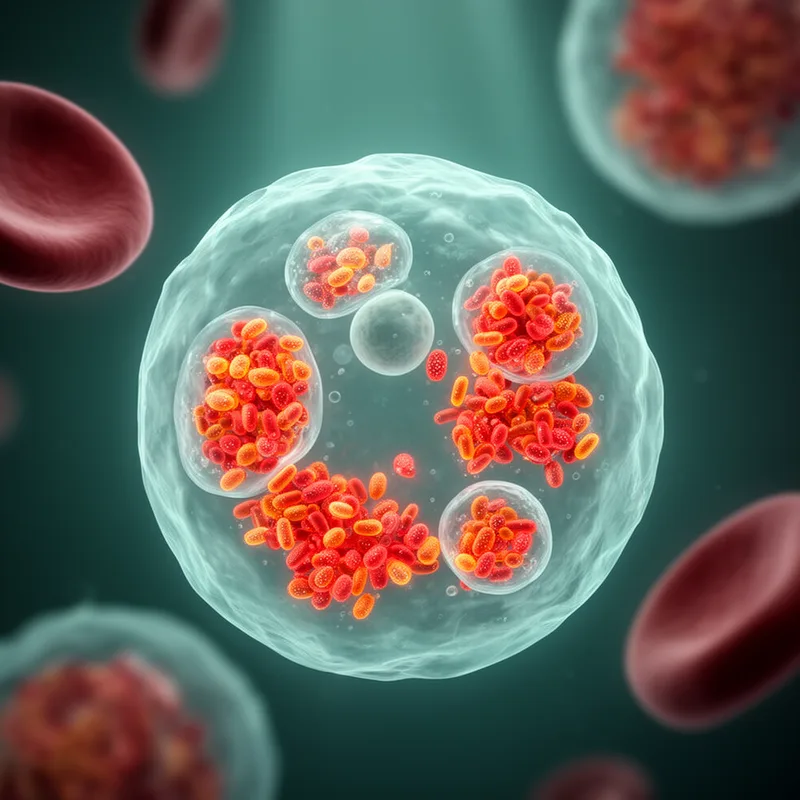
A group of small bacteria that live inside cells and can cause disease
Compounds
- Specialized
1
9.9
A group of small bacteria that live inside cells and can cause disease
Surface Forms
Morphology
Rickettsiales = Rickettsia (opaque) = Rickettsia + ales
Formation uses a specialized Latin taxonomic suffix '-ales' to denote an order; this scientific naming process is not productive or familiar to average learners, so knowing 'Rickettsia' alone does not let them infer 'order of bacteria'.
Etymology
Rickettsiales comes from the name of the scientist Ricketts, who studied these bacteria, plus the ending -ales, which means 'order' or 'big group' in biology. So Rickettsiales names the order of small bacteria that often cause disease in people and animals.