
Rhizophoraceae
- noun
- /raɪˌzoʊfəˈreɪʃiˌi/
- Specialized
- Many species in the Rhizophoraceae family play a crucial role in stabilizing coastal ecosystems.
Examples
-
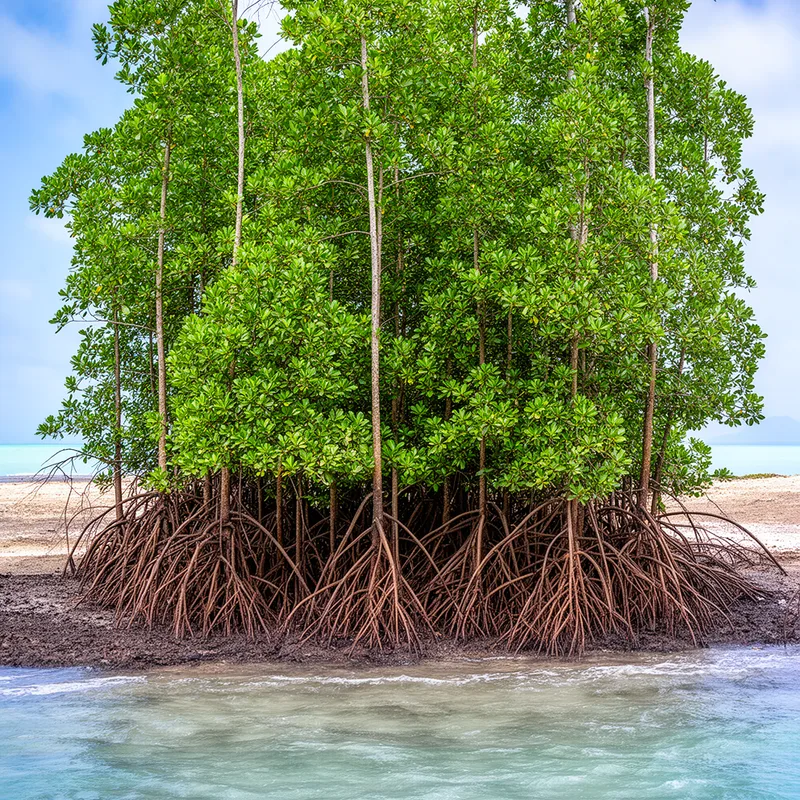
The Rhizophoraceae dominate the mangrove forests along the tropical coastline.
-
Researchers are studying how Rhizophoraceae adapt to saline environments.
-
The Rhizophoraceae family includes many species found in tropical regions.
-
Many Rhizophoraceae trees thrive in coastal environments.
-
The Rhizophoraceae family includes many species found in tropical regions that are vital for coastal protection.
-
Many species in the Rhizophoraceae family play a crucial role in stabilizing coastal ecosystems.
-
The Rhizophoraceae dominate the mangrove forests along the tropical coastline.
Synonyms

A group of tropical trees and shrubs that form mangrove forests along coasts

A group of trees and shrubs that grow along warm coasts often in shallow salty water
Compounds
- Specialized
A group of tropical trees and shrubs that form mangrove forests along coasts
Surface Forms
Morphology
Rhizophoraceae = Rhizophora (opaque) = Rhizophora + aceae
The formation uses the scientific Latin family ending '-aceae' attached to a genus name; this taxonomic construction is specialized and not transparently meaningful to an average learner.
Etymology
Rhizophoraceae comes from three parts: rhizo- meaning 'root', -phor- meaning 'to carry', and -aceae, a common ending for plant families. So it can be seen as the 'root-carrying' family, a good image for mangrove trees with big roots that hold and protect the coast.

