
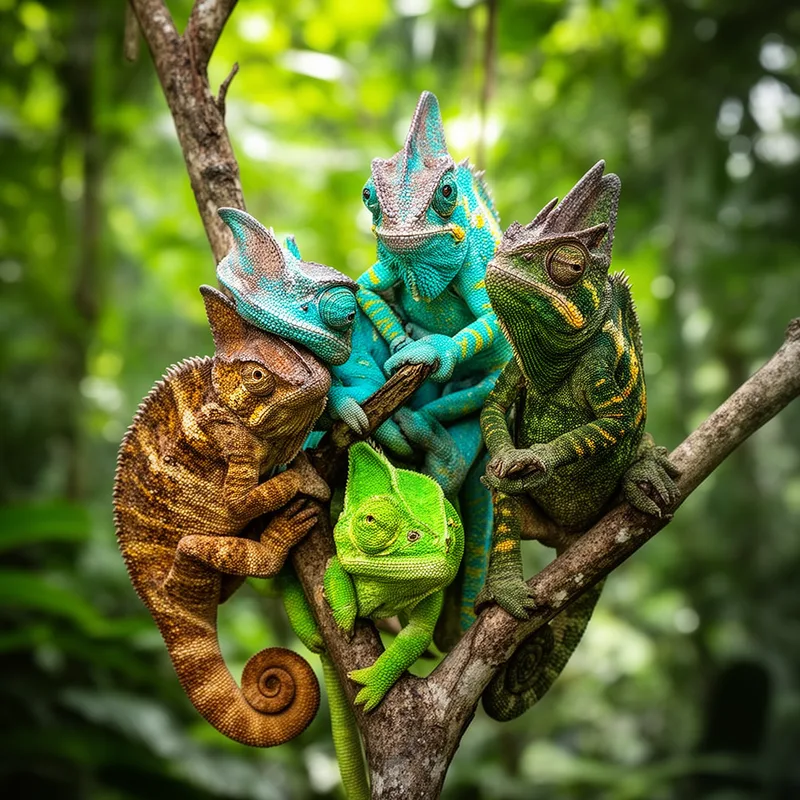
Rhiptoglossa
- noun
- Specialized
- The Rhiptoglossa include various species of Old World chameleons.
Examples
-
In some classifications, Rhiptoglossa is considered a distinct superfamily of lizards.
-
Herpetologists study the evolutionary relationships within Rhiptoglossa to better understand chameleon diversity.
-
The chameleons of the genus Rhiptoglossa are known for their zygodactylous feet and independently mobile eyes.
-
Did you know that the Rhiptoglossa are unique reptiles?
-
Herpetologists study the evolutionary relationships within Rhiptoglossa to better understand chameleon diversity.
-
In some classifications, Rhiptoglossa is considered a distinct superfamily of lizards.
-
The chameleons of the genus Rhiptoglossa are known for their zygodactylous feet and independently mobile eyes.
Synonyms


 1
9.9
A family of lizards that can change color and move each eye separately
A group of chameleons that live in Africa and parts of Asia and can change colour
A group of lizards that includes chameleons from Africa and Madagascar
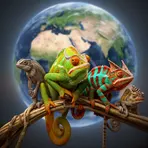
A family of lizards that includes chameleons found in Africa, Europe, and Asia
Compounds
- Specialized
A group of chameleons that live in Africa and parts of Asia and can change colour
Surface Forms
Etymology
Rhiptoglossa combines Greek parts rhipto- 'to throw' and glossa 'tongue', so it gives the picture of a 'throwing' tongue. That's why the name fits this group of Old World chameleons, which use a tongue that 'shoots' out to catch prey.