
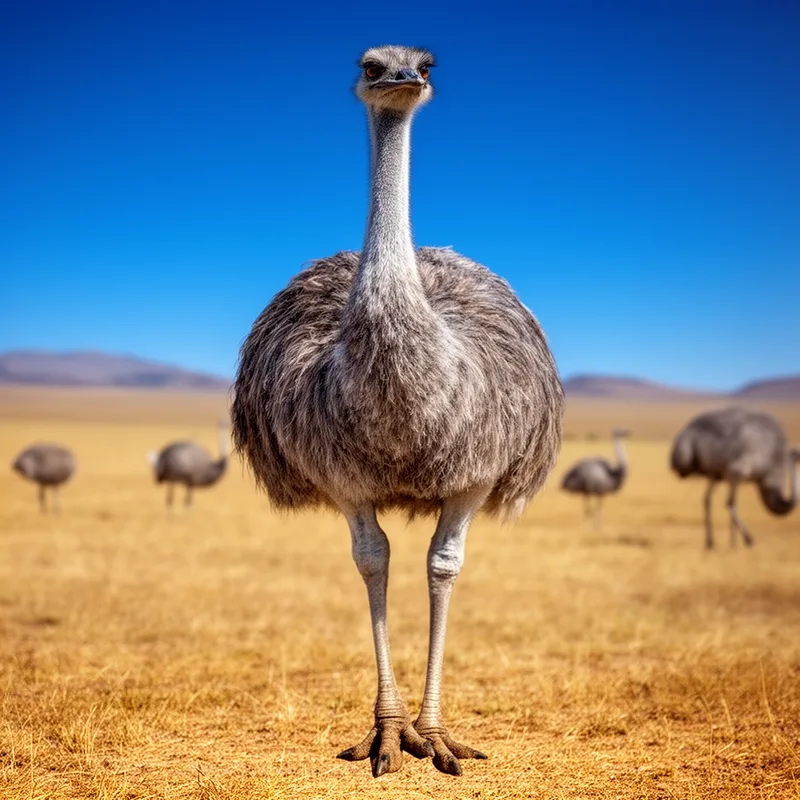
Rheiformes
- noun
- /ˈreɪɪfɔːrmiːz/
- Specialized
- Unlike ostriches, members of the Rheiformes have three toes on each foot.
Examples
-
The Rheiformes comprise the extant rheas and several extinct species once native to South America.
-
Did you know that Rheiformes include rheas?
-
Many paleontologists study fossil records to learn about the evolution of Rheiformes.
-
The Rheiformes are fascinating creatures native to South America.
-
The Rheiformes are known for their large size and inability to fly, setting them apart from other birds.
-
Many researchers focus on the conservation of Rheiformes to protect these unique South American birds.
-
In zoology, Rheiformes refers to the group that includes both the living rheas and some extinct relatives.
Synonyms
Large birds from South America that cannot fly and look like ostriches

A family of large flightless birds from South America like an ostrich
Surface Forms
Morphology
Etymology
The word Rheiformes comes from the bird name rhea and the ending -formes, which means 'shape' or 'form'. Like in uniform, -formes means 'in the shape of'. So Rheiformes are birds 'in the shape of' a rhea, meaning large, flightless birds like ostriches and emus.

