

Rhapis excelsa
- noun
- Specialized
- Because it thrives in low light, Rhapis excelsa is a popular choice for indoor gardening.
Examples
-
The Rhapis excelsa is often used as a decorative plant in offices and homes.
-
Botanists admire the slender stems and lush green leaves of Rhapis excelsa.
-
The Rhapis excelsa is a popular indoor plant.
-
Many people love the Rhapis excelsa for its elegance.
-
Because it thrives in low light, Rhapis excelsa is a popular choice for indoor gardening.
-
Botanists admire the slender stems and lush green leaves of Rhapis excelsa.
-
The Rhapis excelsa is often used as a decorative plant in offices and homes.
Synonyms

A small decorative palm with thin stems and coarse fibers at the leaf bases

A small tropical plant with fan-shaped leaves, thin stems, and loose fibers at the leaf bases
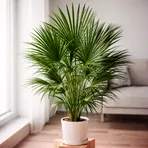
A small indoor plant with many thin, fan-shaped leaves
Surface Forms
Morphology
Rhapis + excelsa
This is a Latin binomial (taxonomic) name rather than an ordinary English phrase: knowing 'Rhapis' may hint that it is a palm genus, but 'excelsa' is not an English lexical item here (and is presented as '[Word not found in dictionary]'). The name functions as a label for a species rather than a compositional combination whose meaning a B1 learner could derive from the parts, so it is not predictable from the constituents.
Etymology
Rhapis excelsa may come from old Greek and Latin words: Rhapis possibly from a Greek word meaning 'needle' or 'rod' for its thin, reedlike stems, and excelsa from Latin meaning 'tall'. So the name paints a simple picture — a 'tall' thin palm — which fits the plant's slim stems and upright growth.

