
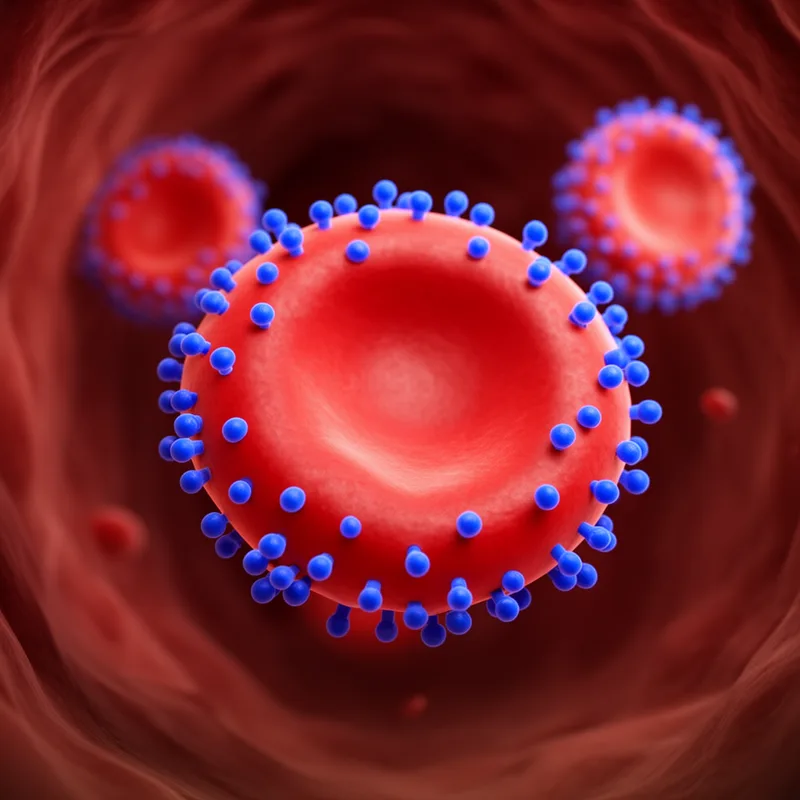
Rh positive


 1
4.6
1
4.6
- adjective
- /ɑr eɪtʃ ˈpɑzɪtɪv/
- Specialized
- Most humans have these antigens and are considered Rh positive.
Examples
-
There is an antigen called Rh; if you have it on your red cells, you are Rh positive; otherwise, you are negative.
-
He also pointed out that only 15 percent of the female population has Rh positive blood, and the other 85 percent who are negative would be completely unaffected.
-
There is an antigen called Rh; if you have it on your red cells, you are Rh positive; otherwise, you are negative.
Blog text (1) -
The allele is important because, in the absence of modern medicine, if a woman who is Rh negative has a child that is Rh positive, her body will react to the antigen.
Blog text (1) -
The next day we went to the hospital for Anti-D gamma globulin, as I'm Rh negative and my husband is Rh positive (and the baby too).
Fiction book (1998)
Synonyms
Blood that has a protein on red blood cells affecting blood type
Antonyms

Surface Forms
Morphology
The meaning 'having the Rh factor present on red blood cells' follows directly from combining 'Rh' (the antigen on red cells) with 'positive' (indicating presence), so the sense is compositionally predictable. This medical labeling pattern is cross-linguistically common (e.g., Spanish/French equivalents), so a B1 learner who knows both constituents would readily understand the term.
Etymology
Rh positive may come from early blood studies on rhesus monkeys, when scientists found a small protein on red blood cells and named it Rh for rhesus. Being positive means 'having' that protein, so Rh positive today means 'having' the Rh mark on your red blood cells.