
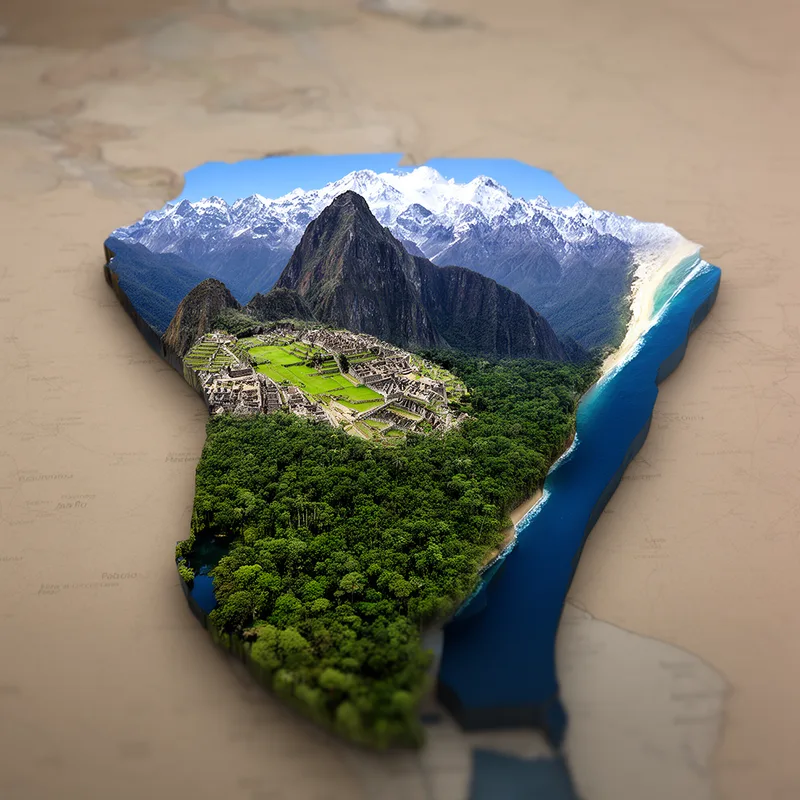
Republic of Peru
- proper noun
- /rɪˈpʌblɪk əv pəˈru/
 :
República del Perú
:
República del Perú
- The Republic of Peru is renowned for its diverse landscapes, from the Andes mountains to the Amazon rainforest.
Examples
-
Tourists often visit the Republic of Peru to explore ancient Inca sites like Machu Picchu.
-
After independence from Spain, the Republic of Peru established its own government in 1821.
-
The Republic of Peru is known for its rich cultural heritage.
-
Did you know that the Republic of Peru was once part of the Inca Empire?
-
The Republic of Peru is known for its rich cultural heritage.
-
Tourists often visit the Republic of Peru to explore ancient Inca sites like Machu Picchu.
-
The Republic of Peru is renowned for its diverse landscapes, from the Andes mountains to the Amazon rainforest.
Synonyms

 112
1.0
112
1.0

A country in western South America with high mountains and ancient Inca ruins
Surface Forms
Morphology
The phrase is a straightforward compositional name: 'republic' (a form of government) + 'of' (genitive/possessive linker) + 'Peru' (the country), so the meaning 'the republic that is Peru' is directly derivable from the parts. This kind of government-noun + of + country construction is cross-linguistically common and would be clear to a B1 learner who knows the constituent words.
Etymology
Republic of Peru comes from two parts: republic, meaning 'a country where people choose their leaders', and Peru, the local name for the land. One popular story says early explorers heard 'Peru' from a native chief called Birú, and after independence in 1821 the country used this name to show it was a republic.