
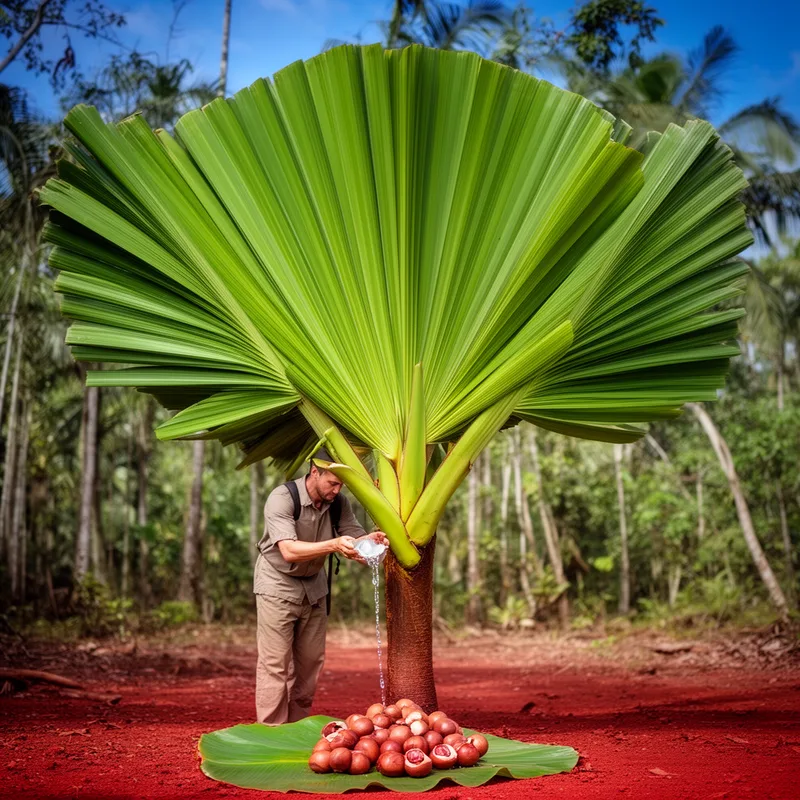
Ravenala madagascariensis


 1
9.9
- noun
- Specialized
- The Ravenala madagascariensis, or traveler's palm, is a common sight in Madagascar's rainforests.
Examples
-
Early explorers used the sap from Ravenala madagascariensis as a source of drinking water.
-
Gardeners prize Ravenala madagascariensis for its dramatic, fan-shaped leaves.
-
The Ravenala madagascariensis is often called the traveler's palm.
-
Many tourists are fascinated by the Ravenala madagascariensis during their visit to Madagascar.
-
Early explorers used the sap from the Ravenala madagascariensis as a source of drinking water.
-
Gardeners prize Ravenala madagascariensis for its dramatic, fan-shaped leaves.
-
The Ravenala madagascariensis, or traveler's palm, is a common sight in Madagascar's rainforests.
Synonyms
 1
9.9
A tall tropical plant with fan-shaped leaves that stores clear drinkable sap in its stems
A tall tropical plant from Madagascar with fan-shaped leaves and drinkable sap in its leafstalks
Surface Forms
Morphology
ravenala + madagascariensis
This is a botanical binomial combining the genus name 'Ravenala' (a Madagascar plant) with the Latin adjectival epithet 'madagascariensis' meaning 'from Madagascar'. If a learner knows both constituents, the species name is directly interpretable as 'the Ravenala from Madagascar' (a compositional origin-based name), so the meaning is transparent, although the Latin form may be unfamiliar to many learners.
Etymology
Ravenala madagascariensis is often called the 'traveler's palm' because its large leaf bases and stems collect rain and hold drinkable sap. So, tired travelers could cut a stalk and drink the water, which is why the plant became known as a helpful source on the road.