
Rappahannock
 2
9.3

- proper noun
- /ˌræpəˈhænək/
- The full body of federal forces crossed the Rappahannock on Dec. 12, 1862, and Burnside ordered a series of deadly and ineffective frontal assaults on two heights in the city, leaving thousands dead and wounded.
- Rappahannock River
Examples
-
Oysters from the Rappahannock River, Va., were the favorites for immediate shucking.
Academic text (1996) -
Forced to retreat above the Rappahannock, and there defeated once more.
Fiction book (1992) -
"Lee unfolded the paper, read: "We hold Rappahannock Station."
Fiction book (1992) -
But for the untried army on the Rappahannock... war was simply a matter of waiting... waiting... and endless drilling.
-
Sedgwick has another 40,000 spread out along the Stafford Heights... ...on the north bank of the Rappahannock in front of General Early at Fredericksburg.
-
The next day they tracked Booth to the Rappahannock River, and they shuttled over it on a rude scow that carried eight men and horses at a time.
Academic text (2009) -
On Dec. 11, 1862, Union troops sneaked forward under the pre-dawn fog to begin building pontoon bridges crossing the Rappahannock River at Fredericksburg, drawing Confederate fire.
Blog text (27) -
The Rappahannock River flows eastward into the Chesapeake Bay.
-
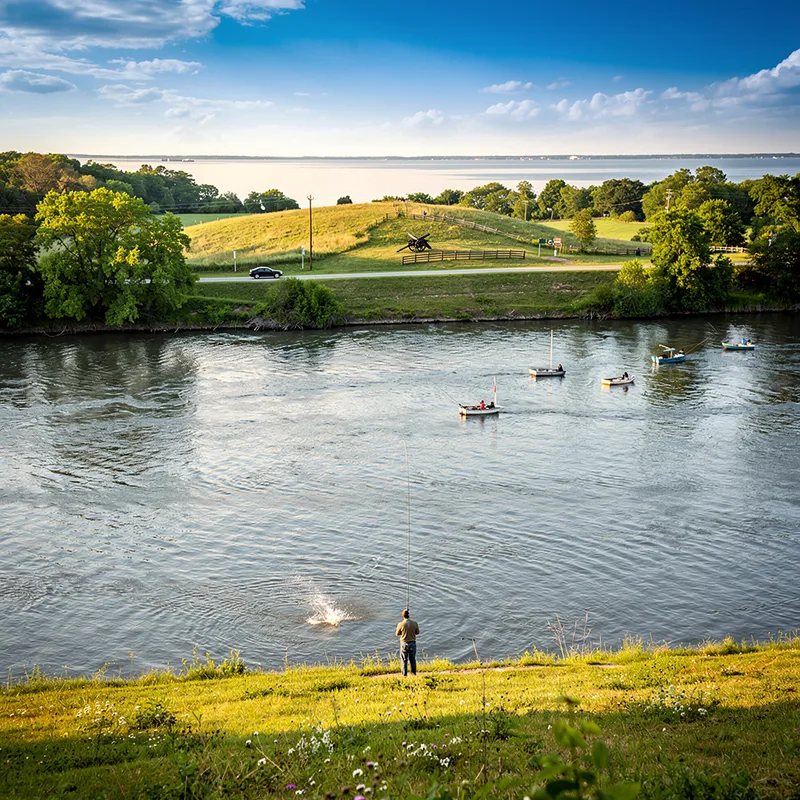
Fishing along the banks of the Rappahannock River is a popular local activity.
-
The scenic views from the Rappahannock River attract many tourists every year.
Synonyms
 1
7.3
A river in eastern Virginia that flows into the Chesapeake Bay
Compounds
Surface Forms
Etymology
Rappahannock comes from a Native American Algonquian word meaning 'where the tide ebbs and flows'. That's why the name fits this Virginia river, because its water moves with the tide and can rise quickly.