
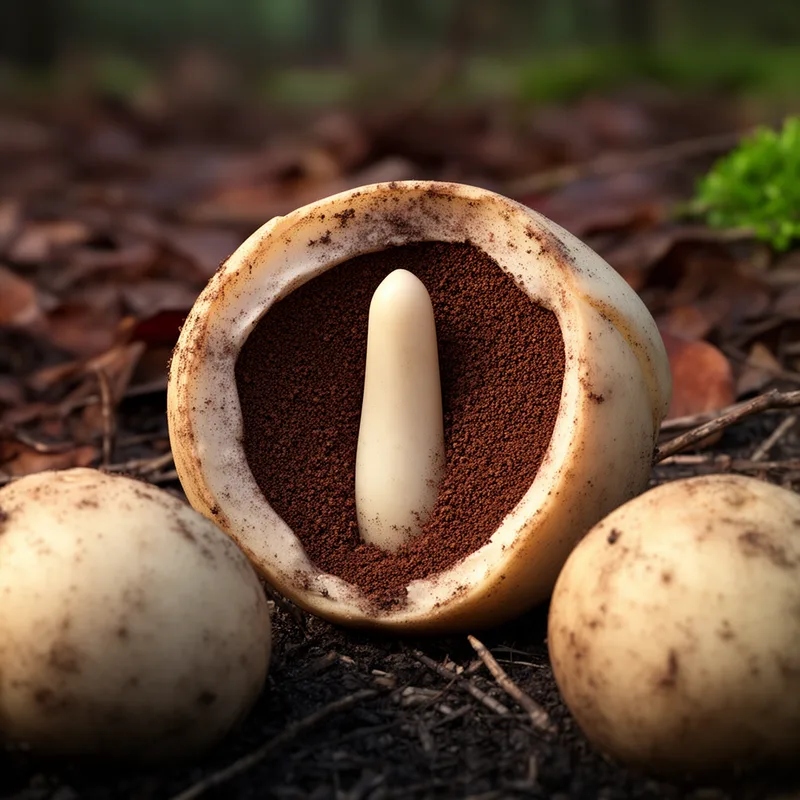
Radiigera fuscogleba
- noun
- Specialized
- Unlike the common earthstar, Radiigera fuscogleba remains closed throughout its life cycle.
Examples
-
The dark brown spore mass of Radiigera fuscogleba is a key feature that sets it apart from other fungi.
-
The unique structure of Radiigera fuscogleba helps mycologists distinguish it from similar fungi.
-
Scientists discovered several Radiigera fuscogleba specimens in the forest soil.
-
The Radiigera fuscogleba is often found in damp forest areas.
-
Have you ever seen a Radiigera fuscogleba in the wild?
-
Researchers identified several Radiigera fuscogleba in the forest, noting its distinctive closed form.
-
In damp woodland areas, Radiigera fuscogleba can often be found hiding among the leaf litter.
Surface Forms
Morphology
Radiigera + fuscogleba
This is a Latin binomial taxonomic name functioning as a fixed technical label; its referent (a particular fungus with specific morphological traits) is not derivable by a B1 learner from the constituent parts. The second element 'fuscogleba' is not a known English word and the overall form is lexicalized scientific nomenclature rather than a compositional, everyday English phrase, so the meaning would be opaque to learners.
Etymology
Radiigera fuscogleba may come from Latin words: Radiigera meaning 'with rays' and fuscogleba combining 'fusco' for 'dark brown' and 'gleba' for 'spore mass'. So the name paints a picture of a fungus with ray-like parts and a brown spore mass, which helps you remember its closed form with a brown column of spores.

