

RA
 17
9.8
17
9.8

- noun
- Specialized
- Medical morbidity, e.g., diabetes mellitus, chronic inflammatory disorders (RA); tarsal tunnel syndrome, spinal problems such as root entrapment.
Examples
-
In patients with rheumatoid arthritis (RA), are some tumor-necrosis factor (TNF) inhibitors safer than others?
Academic text (2015) -
The astronomer calculated the RA of the star to determine its position in the sky.
-
Skin lesions are relatively common in patients with RA, occurring in approximately 20% of patients.
Academic text (2007) -
The activity and damage of RA were assessed by using the Overall Status in Rheumatoid Arthritis instrument.
Academic text (2003) -
Pulmonary nodules are a rare manifestation of RA. They may cause spontaneous pneumothorax depending on their location.
Academic text (2007) -
In rheumatoid arthritis (RA), what are the efficacy and safety of rituximab (RTX)?
Academic text (2015) -
Past medications for RA had included NSAIDs, hydroxychloroquine, azulfidine, aspirin, sulfasalazine, gold, and prednisone.
Academic text (2007) -
To chart the celestial object's movement, she noted its RA in hours and minutes.
-
Using a telescope, he measured the RA of the planet as it rose in the eastern sky.
Synonyms
 3
9.4
3
9.4
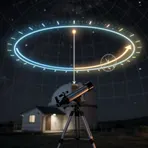
An object's eastward angle along the sky's equator used to find its position, shown in hours

How far east a star or planet is along the sky's equator from the spring equinox
Compounds

- Literature
An Egyptian sun god formed by joining Amun and Ra, worshipped as the main god in Thebes

- Literature
A chief Egyptian god made by joining Amun and Ra and worshipped as the sun god

- Literature
A powerful sun goddess in ancient Egypt who appears as a lioness and protects or destroys
Surface Forms
Morphology
RA = R + A
RA is an initialism for 'right ascension'; the individual letters do not convey the meaning to learners, so the form is not transparently built from recognizable English morphemes.
Etymology
RA is short for right ascension, where ascension means 'rising' and right means 'straight' or 'correct'. So RA tells astronomers how far east a star has 'risen' along the sky's equator from a fixed starting point, which is why it is used to locate objects in the night sky.