
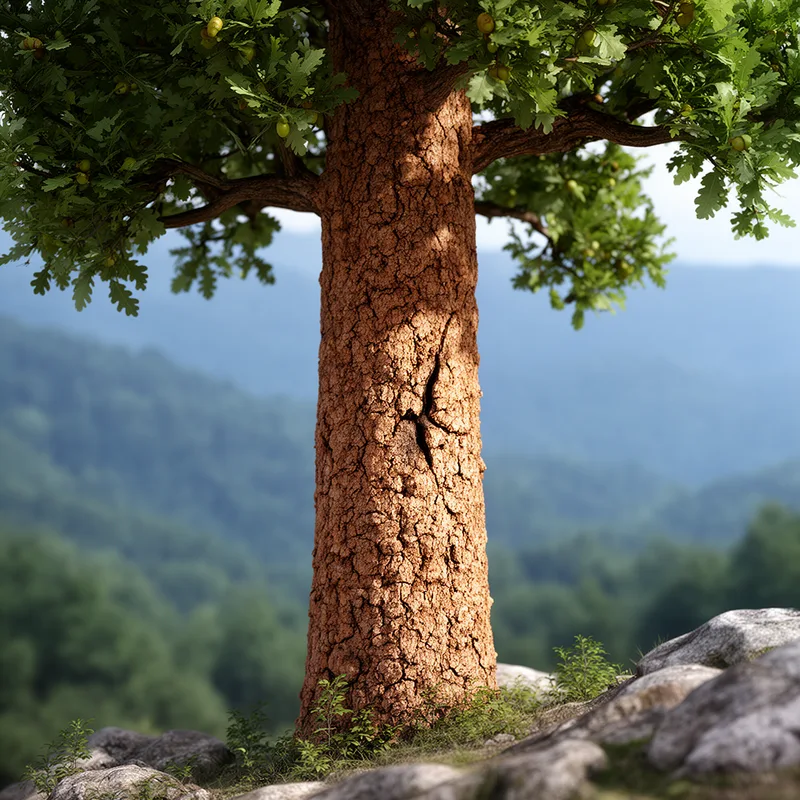
Quercus variabilis
- noun
- Specialized
- The Quercus variabilis is prized for its corky bark, which is sometimes harvested.
Examples
-
In traditional landscaping, Quercus variabilis is valued for its resilience and shade.
-
The Quercus variabilis can grow up to 25 meters tall.
-
Botanists studied the distribution of Quercus variabilis across the mountainous regions of China.
-
In Japan, the Quercus variabilis is often admired for its beauty.
-
In Japan, the Quercus variabilis is often admired for its beautiful foliage during autumn.
-
The Quercus variabilis is a valuable tree in traditional landscaping due to its thick, corky bark.
-
Botanists studied the habitat preferences of Quercus variabilis in various climates across East Asia.
Synonyms
A medium to large tree from China, Japan, and Korea with thick corky bark
How Big


Surface Forms
Morphology
Quercus + variabilis
This is a scientific Latin binomial: 'Quercus' clearly signals the genus (oak), so a learner who knows that constituent could infer the word refers to an oak. However, the specific epithet 'variabilis' is Latin and not a common English descriptor; even if interpreted as 'variable' it does not supply the species-specific traits (deciduous, corky bark, native range). Because the name functions mainly as a taxonomic label rather than a fully descriptive phrase, the relation to constituent meanings is partial.
Etymology
Quercus variabilis comes from Latin: Quercus means 'oak' and variabilis means 'changeable', pointing to the tree's often different leaf shapes and its thick, corky bark. So the name tells you it is a kind of oak that can look quite variable and is known for its corky bark.