
Quercus incana
- noun
- Specialized
 :
roble azul
:
roble azul
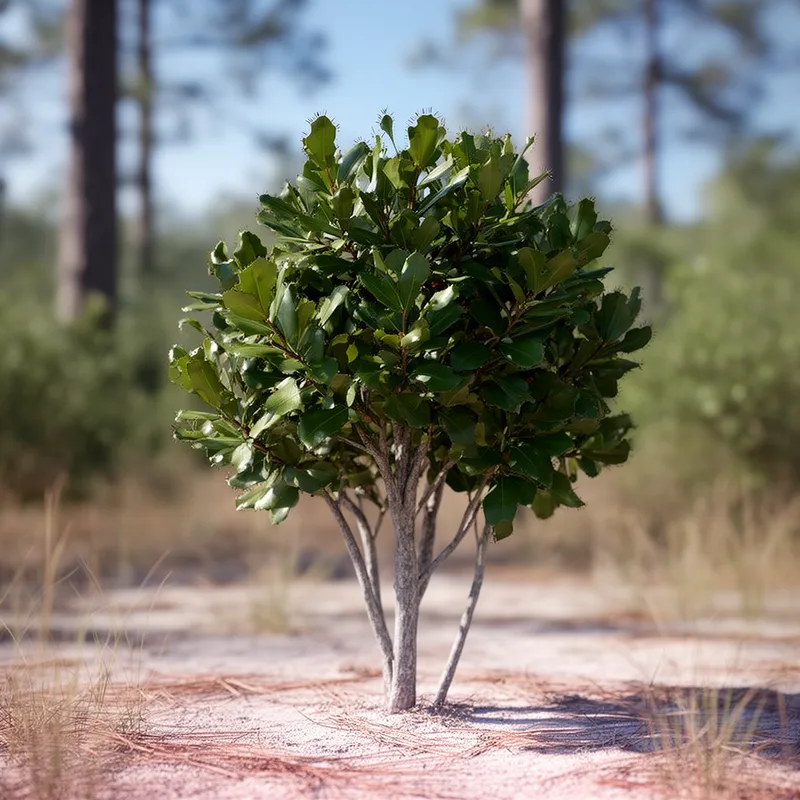
- The leaves of the Quercus incana are easily recognized by their bristly tips.
Examples
-
The Quercus incana thrives in sandy soils throughout the southeastern United States.
-
The Quercus incana is known for its distinctive hairy branches and is commonly found in the southeastern United States.
-
Botanists conducted a study on the distribution of Quercus incana in the wild.
-
The Quercus incana thrives in sandy soils.
-
Have you seen a Quercus incana before?
-
Many wildlife species depend on the Quercus incana for food and shelter in its native habitat.
-
The Quercus incana is a small, semi-evergreen tree that often grows in sandy soils across its range.
Synonyms

A small bushy oak native to the southeastern United States with narrow leaves ending in a bristly point
Surface Forms
Morphology
Quercus + incana
The genus element 'Quercus' directly signals 'oak', so part of the meaning (that this is an oak) is transparent. However, 'incana' is a Latin specific epithet (undefined here) and its descriptive nuance is not predictable to a B1 learner without botanical/Latin knowledge; binomial names are systematic but require domain-specific vocabulary, yielding only partial transparency.
Etymology
Quercus incana comes from Latin: Quercus means 'oak' and incana means 'grey' or 'covered in fine hairs', a description of its pale, hairy leaves and young branches. That's why the name fits this small, shrubby oak with hairy branches and bristly leaf tips.

