
Quercus ilicifolia
- noun
- Specialized
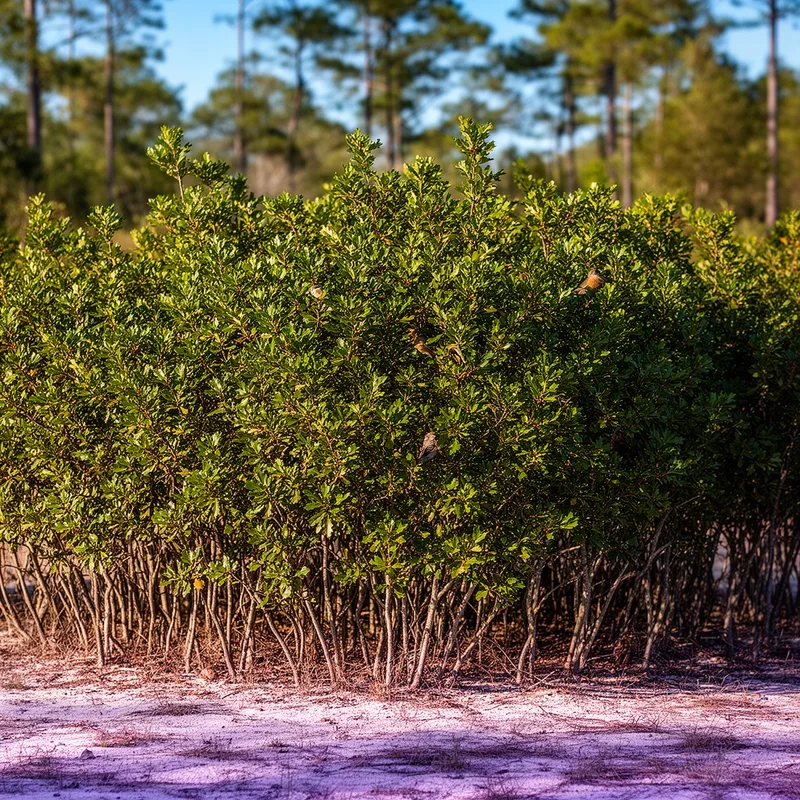
- The dense thickets of Quercus ilicifolia provide important habitat for many bird species.
Examples
-
Quercus ilicifolia, also known as bear oak, thrives in poor, sandy soils.
-
Botanists surveyed several stands of Quercus ilicifolia in the region for conservation studies.
-
The Quercus ilicifolia thrives in sandy soils.
-
Many birds nest in the dense thickets of Quercus ilicifolia.
-
In the southeastern United States, Quercus ilicifolia often grows in dense thickets, providing shelter for wildlife.
-
The shrubby oak species Quercus ilicifolia is known for its resilience in harsh, sandy environments.
-
During their research, the team focused on the growth patterns of Quercus ilicifolia in various habitats.
Synonyms

A small oak tree that grows like a bush and forms dense thickets
How Big


Surface Forms
Morphology
Quercus + ilicifolia
This is a Latin binomial (taxonomic name) rather than a regular English phrase: 'Quercus' may be glossed as the oak genus but 'ilicifolia' is not an English word and the species epithet encodes botanical detail. The overall meaning ('a particular shrubby oak species') therefore cannot be derived by a B1 learner from ordinary English composition patterns or the given constituents without specialist botanical/Latin knowledge.
Etymology
Quercus ilicifolia comes from old Latin words: Quercus means 'oak' and ilicifolia means 'holly-leaved'. So the name pictures a low, shrubby oak with stiff, holly-like leaves that often grow together in dense thickets.