
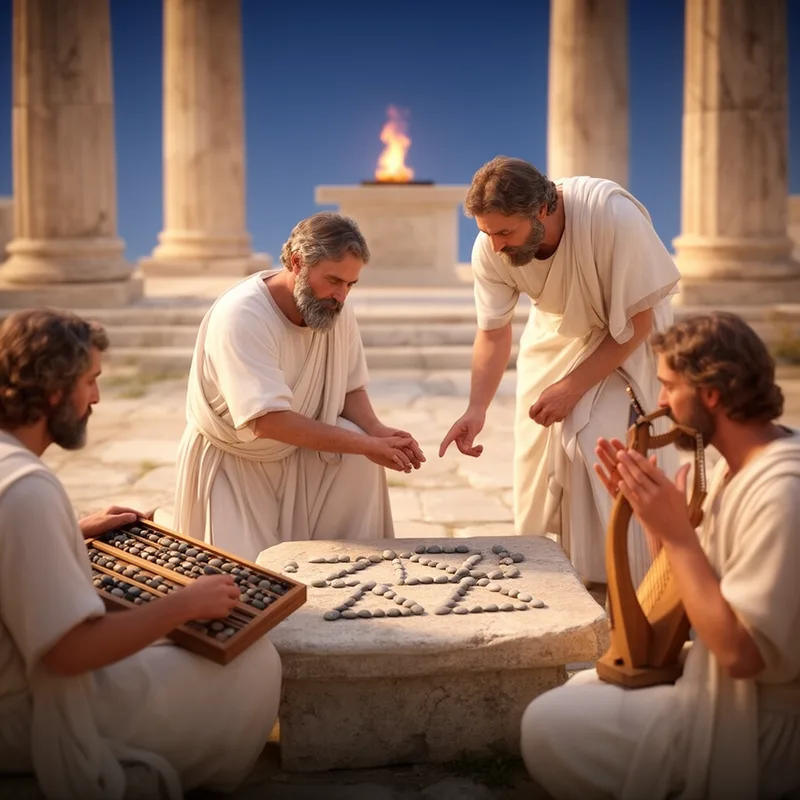
Pythagoreans
 1
9.9

- proper noun
- /ˌpɪθəˈɡɔriənz/
- The Pythagoreans believed that numbers held a mystical significance in the universe.
Loading YouTube…
Watch on YouTubeAnd until the time of the Pythagoreans, it was assumed that all numbers were rationals.
- And until the time of the Pythagoreans, it was assumed that all numbers were rationals.
- So he talks instead about the Pythagoreans and what it is that they teach as a contemporary school in his own setting.
Examples
-
And until the time of the Pythagoreans, it was assumed that all numbers were rationals.
-
The Pythagoreans practiced a way of life that combined philosophy and religious beliefs.
-
But the Pythagoreans didn't really couldn't really put their finger on what the difference was.
-
Many ideas about mathematics were developed by the Pythagoreans during their studies.
Surface Forms
Morphology
Pythagoreans = Pythagorean (transparent) = Pythagoras + ean + s
Regular plural formation from the singular 'Pythagorean' (derived from the name 'Pythagoras' with the adjective-forming suffix '-ean'), so the immediate step to plural is transparent.
Etymology
Pythagoreans comes from the name Pythagoras and originally meant his 'followers'. They were an ancient Greek group who believed numbers were the foundation of the world, so the name now means members of his philosophical and religious school.