
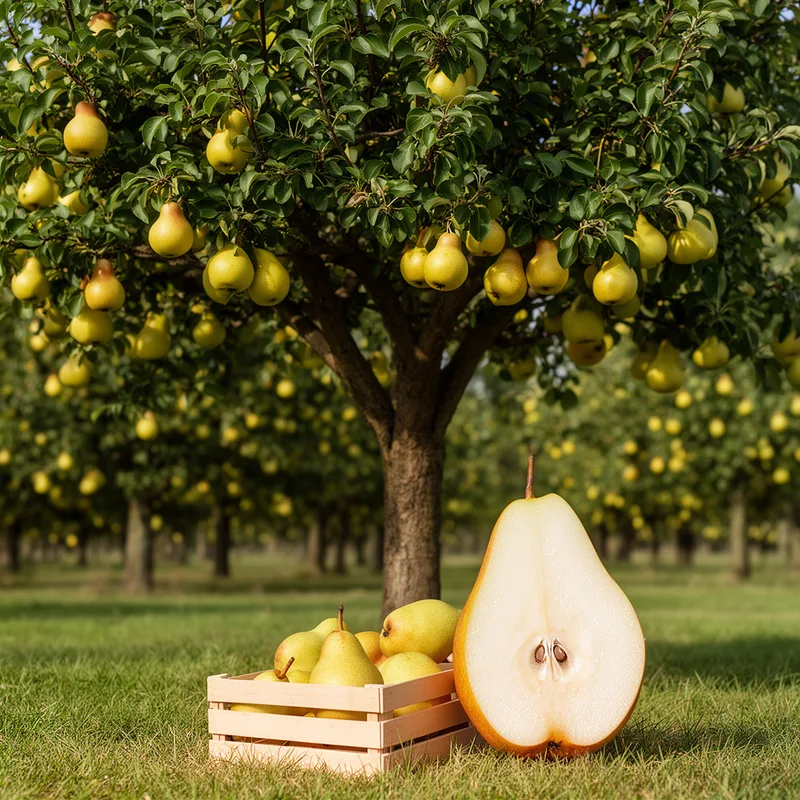
Pyrus communis
- noun
- Specialized
- The orchard was filled with mature Pyrus communis trees laden with ripe fruit.
Examples
-
Botanists studied the growth patterns of Pyrus communis in different climates.
-
She planted a Pyrus communis in her backyard to enjoy fresh pears each year.
-
The Pyrus communis is known for its sweet fruit.
-
Many gardeners prefer Pyrus communis for its hardiness.
-
The Pyrus communis tree produces sweet, juicy pears that are popular in many desserts.
-
Farmers in France often grow Pyrus communis for its delicious and gritty-textured fruit.
-
During the autumn, the Pyrus communis is abundant with ripe pears ready for harvesting.
Synonyms
 110
1.0
110
1.0

A tree that produces a sweet, juicy fruit with a rounded bottom and a narrow top
 3
1.0
3
1.0
A tree that makes sweet, juicy fruit called pears
Surface Forms
Morphology
Pyrus + communis
The compound is a Linnaean binomial formed from the genus name 'Pyrus' (pear-producing trees) and the epithet 'communis' (Latin for 'common' and a cognate of 'common' in many languages), so its meaning 'the common pear tree' is directly derivable from the parts. Although botanical Latin is technical, a B1 learner who knows the constituents would readily infer the intended referent.
Etymology
Pyrus communis comes from Latin words: Pyrus meaning 'pear' and communis meaning 'common', so it literally means the 'common pear'. That's why the name refers to the ordinary pear tree grown across Europe for its sweet, grainy fruit.