
Pyrrhus
 4
9.9
4
9.9

- proper noun
- /ˈpɪrəs/
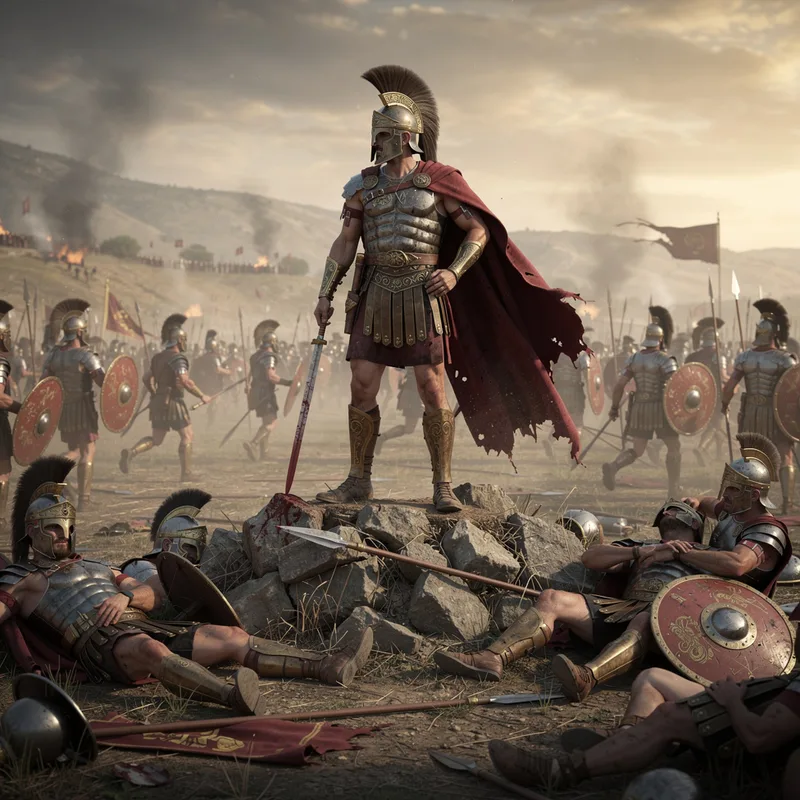
- King Pyrrhus famously stated, "Another such victory and we are undone," reflecting the heavy toll of his battles against the Romans.
- King Pyrrhus
Examples
-
It refers to this guy named Pyrrhus.
-
What was the end of pyrrhus?
-
Do you know anything about pyrrhus?
-
Pyrrhus defeated the Romans... ...on two separate occasions.
-
End of pyrrhus, sir?
-
- Pyrrhus, sir?
-
Montaigne begins his article by describing King Pyrrhus' reaction upon seeing the Roman army ready for combat with the Greeks:
Academic text (1994) -
Why, for instance, did the censors strike from the manuscript Leon-tine's allusion to the Spartan women who helped to defeat Pyrrhus?
Academic text (1993) -
The opening moment of the essay shows a closure in the word "barbarian" which King Pyrrhus himself opens up: the "other" may not be "barbarous." Montaigne follows his model by showing that the "I" need not be "civilized."
Academic text (1994) -
Roman philosopher Seneca talks about boredom as a kind of nausea, while Greek historian Plutarch notes that Pyrrhus (he of the "Pyrrhic victory") became desperately bored in his retirement.
Blog text (14)
Surface Forms
Etymology
Pyrrhus comes from the Greek name pyrrhos, meaning 'flame-coloured' or 'red', and from the root pyr meaning 'fire'. He was a fierce warrior whose costly wins gave us the phrase 'Pyrrhic victory', so the name now reminds us of a victory that costs too much.