
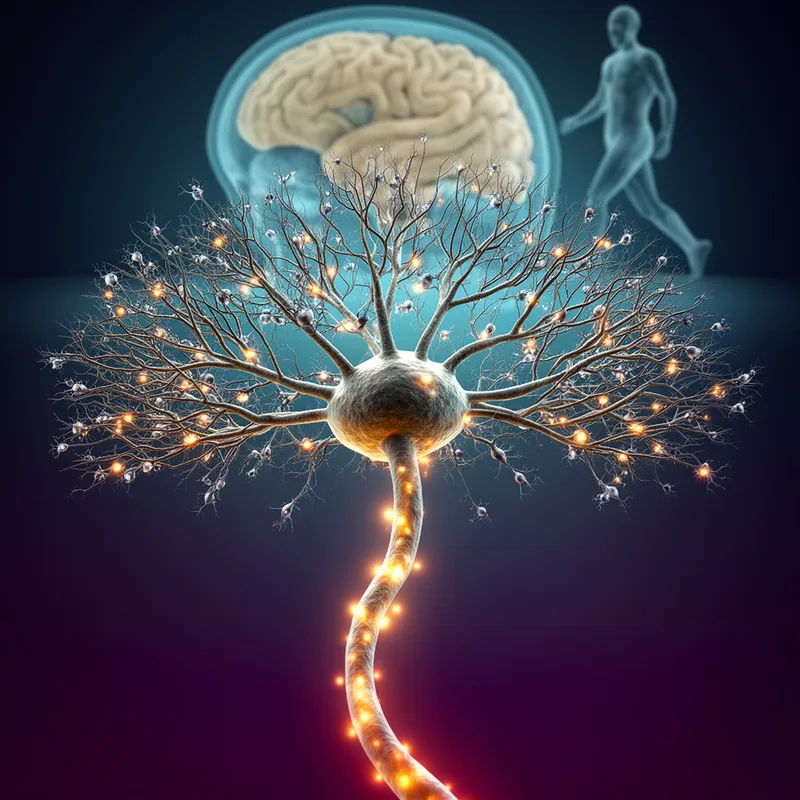
Purkinje cell
- noun
- /ˈpɜr.kɪn.dʒi ˌsɛl/
- Specialized
- Researchers study Purkinje cells to understand brain function.
Examples
-
Damage to Purkinje cells can result in loss of motor coordination.
-
Researchers studied the activity of a single Purkinje cell during movement.
-
The unique structure of the Purkinje cell allows it to receive thousands of synaptic inputs.
-
The Purkinje cell plays a crucial role in motor control.
-
The neurons known as Purkinje cells play a vital role in the coordination of muscle movements.
-
Researchers examined how Purkinje cells function in the cerebellum to improve our understanding of motor control.
-
In the cerebellar cortex, Purkinje cells help refine and smooth out motor commands.
Surface Forms
Morphology
This is an eponymous technical term: knowing 'cell' only tells a B1 learner that it is a biological cell, while 'Purkinje' (a proper name) does not transparently convey the specific neuronal morphology, location, or function. The detailed meaning (a large, branching cerebellar neuron involved in motor control) is specialist knowledge and not derivable from the constituents, so the expression is not predictable to learners.
Etymology
Purkinje cell was named after the 19th-century scientist Jan Purkinje, who first saw these large brain cells with many tree-like branches. He called them Purkinje cells because they look like a little tree inside the brain, and that's why the name now means the big, branching brain cells that 'help control movement'.

