
Ptyas mucosus
- noun
- Specialized
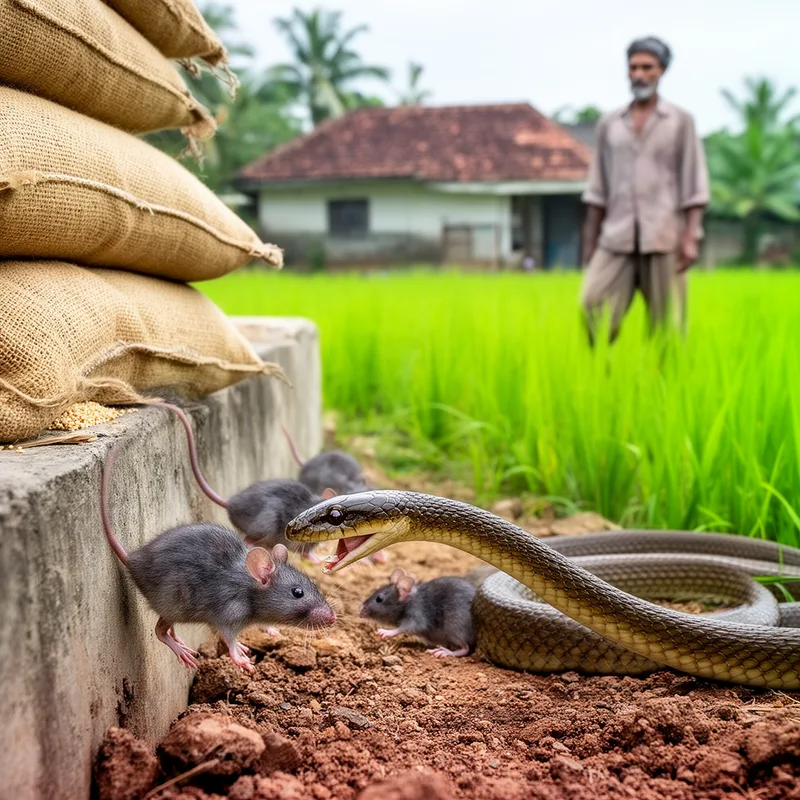
- The Ptyas mucosus is frequently seen in rice fields and urban areas across India.
Examples
-
Farmers welcome Ptyas mucosus for its role in controlling the rodent population.
-
When threatened, Ptyas mucosus may produce a loud hissing sound to deter predators.
-
The Ptyas mucosus is commonly known as the rat snake.
-
Have you ever seen a Ptyas mucosus in the wild?
-
Farmers welcome Ptyas mucosus for its effective role in controlling the rodent population around their fields.
-
The large Ptyas mucosus is often spotted in rice fields and residential areas in Southeast Asia.
-
When it feels threatened, the Ptyas mucosus may hiss loudly to scare off potential predators.
Synonyms

A large snake from South and Southeast Asia that is not poisonous and often enters buildings to catch mice
Surface Forms
Morphology
Ptyas + mucosus
This is a Latin scientific name (binomial) rather than a compositional English phrase; taxonomic labels do not convey the common meaning 'large nonvenomous ratsnake' through ordinary constituent meanings. A B1 learner who knows neither Latin nor the genus label (and with 'mucosus' absent from common dictionaries) would not be able to derive the species identity or properties, so the expression is effectively idiomatic/opaque for learners.
Etymology
Ptyas mucosus may come from old words where Ptyas meant 'snake' and mucosus meant 'slimy', giving the picture of a long, smooth snake. Because this large, not-poisonous ratsnake is shiny, often hisses, and lives near people and farms, that picture helps explain what we mean today by Ptyas mucosus.

