
Ptilonorhynchus violaceus
- noun
- Specialized
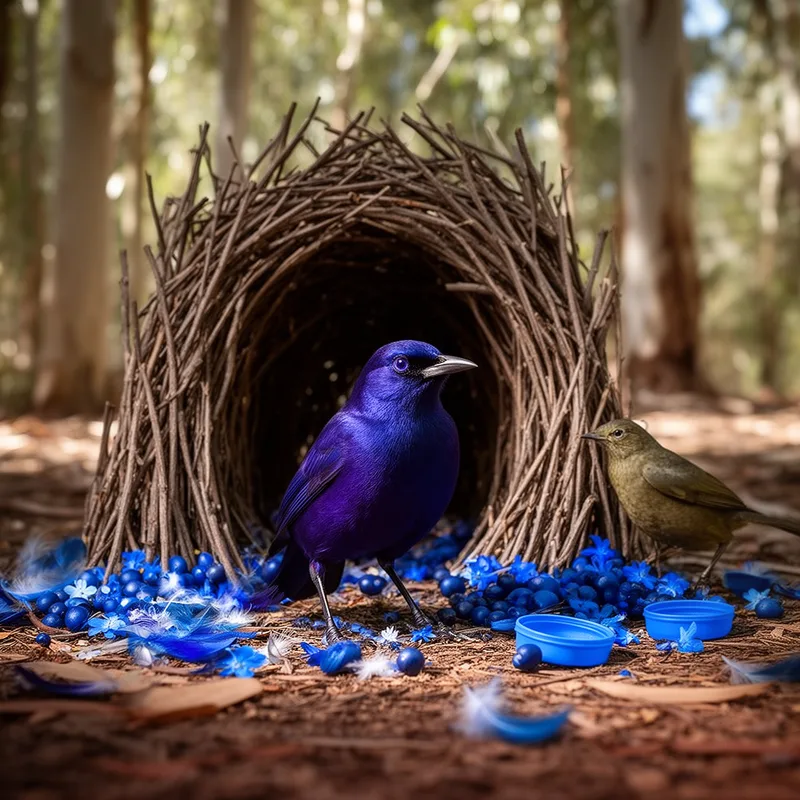
- The male Ptilonorhynchus violaceus builds elaborate bowers to attract females.
Examples
-
Birdwatchers often hope to catch a glimpse of the vibrant Ptilonorhynchus violaceus in Australia.
-
The elaborate bower built by a male Ptilonorhynchus violaceus featured an array of blue and purple items to attract potential mates.
-
A Ptilonorhynchus violaceus was spotted arranging blue objects around its display area.
-
Look at that Ptilonorhynchus violaceus!
-
The Ptilonorhynchus violaceus is known for its unique courtship display.
-
While observing the park, we were delighted to see a stunning Ptilonorhynchus violaceus collecting colorful objects for its bower.
-
During our trip to Australia, we spotted a male Ptilonorhynchus violaceus showcasing its vibrant plumage in the sunlight.
Synonyms

A bird from southeast Australia whose male has shiny blue feathers and builds a decorated structure to attract a mate

A bird from southeast Australia whose male is glossy violet-blue and female is light grey-green
Surface Forms
Morphology
Ptilonorhynchus + violaceus
This is a Latin binomial: the genus element signals a type of bowerbird (Ptilonorhynchus) but the species epithet 'violaceus' is not an ordinary English word and is marked '[Word not found in dictionary]'. Scientific names rely on specialist/Latin knowledge rather than everyday compositional meaning, so a B1 learner would not be able to derive the species’ meaning from the constituents.
Etymology
The name Ptilonorhynchus violaceus comes from old Greek and Latin words: ptilon meaning 'feather', rhynchus meaning 'beak', and violaceus meaning 'violet'. So the name gives the picture of a shiny violet bird with a strong beak, which is why it refers to the satin bowerbird found in southeast Australia.

