
Ptilonorhynchus
- noun
- /ˌtɪləˈnɔrɪŋkəs/
- Specialized
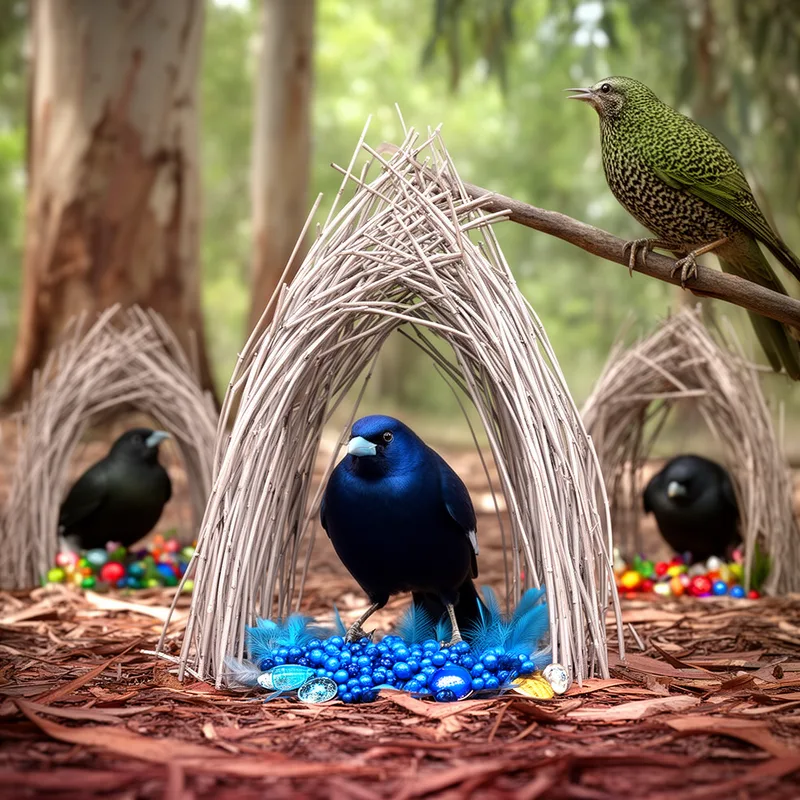
- Researchers observed male Ptilonorhynchus constructing elaborate bowers to attract females.
Examples
-
The satin bowerbird belongs to the Ptilonorhynchus genus.
-
The Ptilonorhynchus genus includes several species noted for their courtship displays.
-
The Ptilonorhynchus species are fascinating to observe.
-
Did you know that the Ptilonorhynchus builds intricate bowers?
-
During mating season, male Ptilonorhynchus species create stunning bowers to impress potential mates.
-
The bright colors and unique designs of the male Ptilonorhynchus bowers draw the attention of passing females.
-
Researchers study the bower-building behavior of the Ptilonorhynchus to understand their mating rituals.
Compounds

- Specialized
An Australian bowerbird whose male is glossy violet-blue and builds decorated bowers to attract females
Surface Forms
Etymology
Ptilonorhynchus comes from Greek parts ptilo 'feather' and rhynchus 'beak'. The idea 'feather-beak' is an easy picture because these are bowerbirds whose males use bright feathers and build fancy houses called bowers to attract mates, so the name reminds you of a showy, display-making bird.

