

Pterocarya fraxinifolia
- noun
- Specialized
- The Pterocarya fraxinifolia is known for its striking winged fruits and can grow up to 30 meters tall.
Examples
-
The Pterocarya fraxinifolia is often planted in parks for its distinctive winged seeds.
-
Botanists studied the leaf patterns of Pterocarya fraxinifolia in the Caucasus region.
-
A mature Pterocarya fraxinifolia can provide ample shade due to its spreading branches.
-
The Pterocarya fraxinifolia thrives in well-drained soils.
-
In the park, we saw a beautiful Pterocarya fraxinifolia tree.
-
We admired the graceful branches of the Pterocarya fraxinifolia as it provided shade during our picnic.
-
In spring, the fragrant flowers of the Pterocarya fraxinifolia attract many pollinators in the Caucasus.
Synonyms
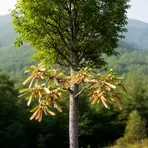
A medium-sized tree from the Caucasus with many branches and winged fruit
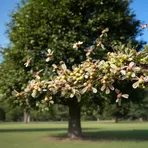
A tree that makes small nuts with wing-like parts that the wind carries
Surface Forms
Morphology
Pterocarya + fraxinifolia
This is a scientific Latin binomial: 'Pterocarya' (a genus) is given but 'fraxinifolia' is not a dictionary word and its Latin roots (fraxinus = ash, folia = leaf) are unlikely to be known by a B1 learner. Botanical Latin naming is specialized, so a learner who only knows the provided constituents would not be able to derive the common-name meaning ('Caucasian wingnut' or 'ash‑leaved Pterocarya'). Therefore the expression is not transparently interpretable for an average B1 learner.
Etymology
Pterocarya fraxinifolia comes from older words: Pterocarya means 'winged nut' and fraxinifolia means 'ash-like leaves'. The name points to its long, winged seeds and leaves that look like an ash tree, so it helps you remember the tree by its winged fruit and leaf shape.

