
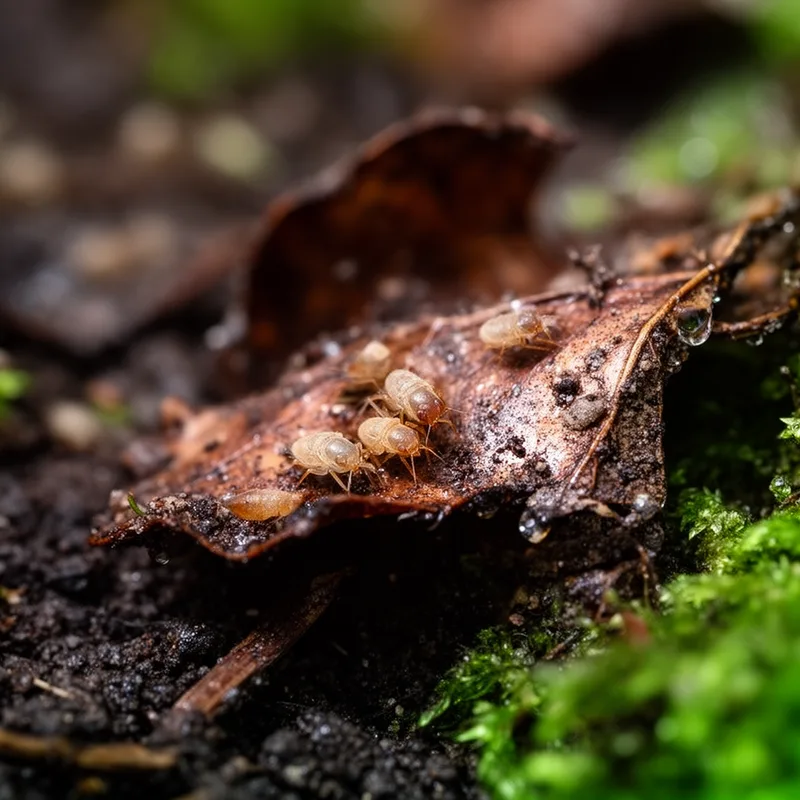
Psocidae
- noun
- /ˈsoʊsɪˌdeɪ/
- Specialized
- Members of the Psocidae are small insects that feed on decaying vegetation in damp habitats.
Examples
-
The Psocidae family includes many species that thrive in damp environments.
-
Scientists discovered a new species within the Psocidae family in South America.
-
Members of the Psocidae are often found in damp environments, where they consume decaying plant material.
-
Unlike true lice, Psocidae do not bite humans and are harmless to books unless in large numbers.
-
Researchers discovered several new Psocidae in the rainforest.
-
Scientists recently identified a new species of Psocidae that lives on decomposing leaves.
-
The Psocidae family plays an important role in breaking down dead plant material in the ecosystem.
Surface Forms
Morphology
Psocidae = Psocus (opaque) = Psocus + idae
Formed by adding the technical taxonomic suffix '-idae' to a genus name; the resulting family name is specialized and not inferable to average learners.
Etymology
Psocidae comes from the Greek root psoc- meaning 'to chew', because these tiny insects feed by chewing on decaying plants and mold, so Psocidae now refers to a family of small, soft-bodied insects related to booklice.

