
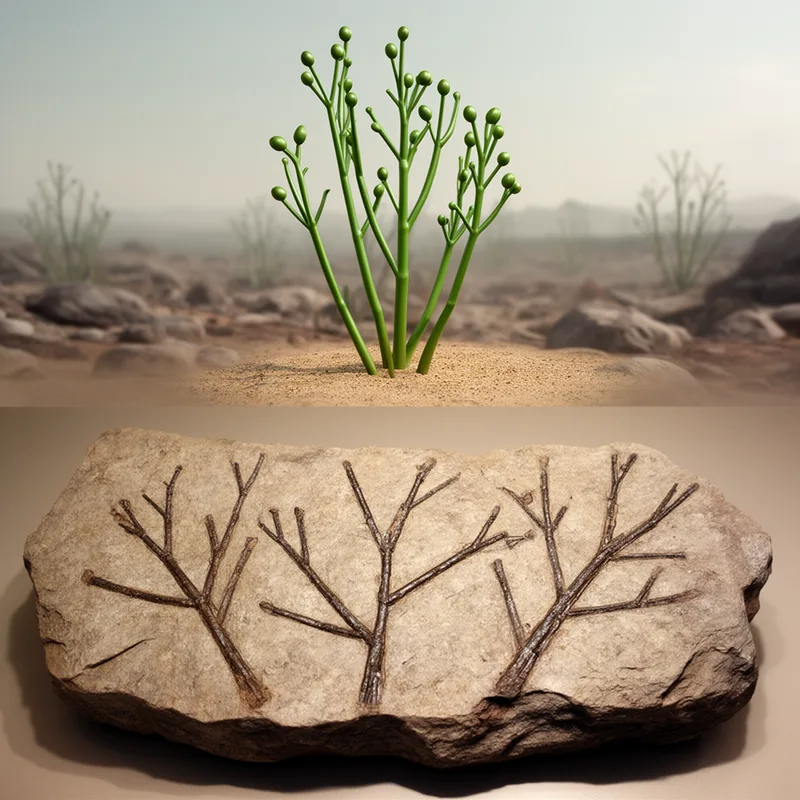
Psilophytales
- noun
- /ˌsaɪləˈfaɪteɪlz/
- Specialized
- The Psilophytales are considered among the first vascular plants to colonize land.
Examples
-
Fossils of the Psilophytales provide valuable insights into early plant evolution.
-
Many fossils of Psilophytales have been discovered in Canada.
-
Many paleobotanists study Psilophytales to understand prehistoric terrestrial ecosystems.
-
The Psilophytales were among the first vascular plants.
-
Fossils of the Psilophytales provide valuable insights into early plant evolution.
-
Many paleobotanists study Psilophytales to understand prehistoric terrestrial ecosystems.
-
The Psilophytales are considered among the first vascular plants to colonize land.
Synonyms

An extinct group of early land plants with simple forked stems and tubes that move water
Compounds
- Specialized
An extinct group of early land plants with simple forked stems and tubes that move water
Surface Forms
Morphology
Psilophytales = Psilophyton (opaque) = psilo + phyt + ales
The form is a scientific taxonomic formation (Greek combining forms + the specialized suffix -ales) and is not predictable to an average B1 learner.
Etymology
Psilophytales comes from Greek parts: psilo- meaning 'bare' and phyta meaning 'plants', with the ending -ales showing it is a group or order. These were very simple, mostly leafless early land plants, so the name is a handy way to remember them as 'bare plants' in a group.

