
Pseudotsuga macrocarpa
- noun
- Specialized
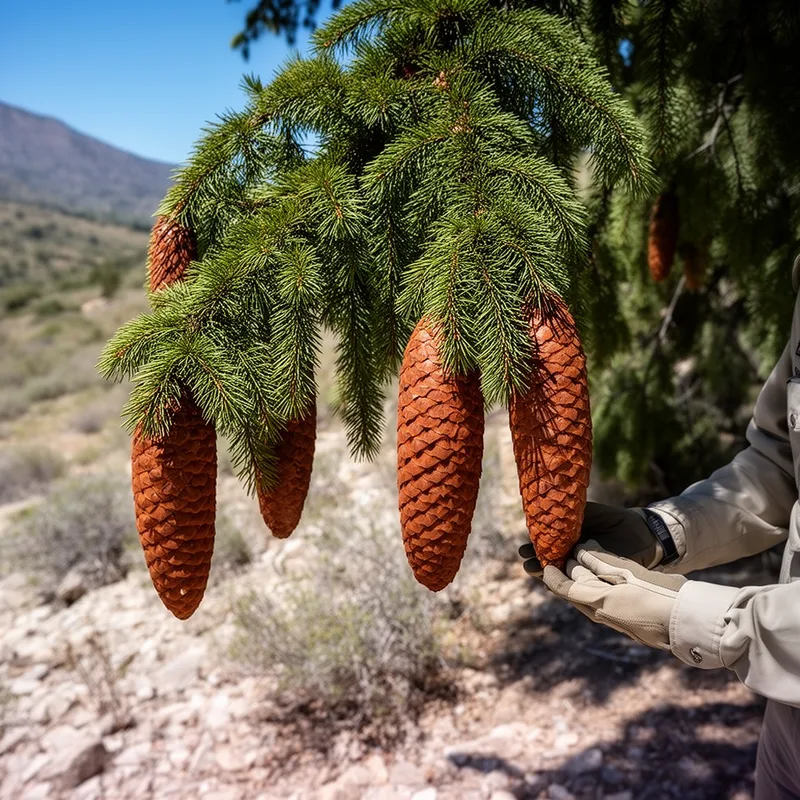
- The majestic tree known as Pseudotsuga macrocarpa produces cones that can reach up to 8 inches in length.
Examples
-
Botanists identified the tree as Pseudotsuga macrocarpa by examining its impressively large, distinctive cones.
-
Forest management efforts focus on preserving stands of Pseudotsuga macrocarpa due to their ecological importance.
-
The Pseudotsuga macrocarpa is well adapted to California's dry, rocky soils.
-
The Pseudotsuga macrocarpa is known for its large cones.
-
Have you ever seen a Pseudotsuga macrocarpa?
-
In California, many parks showcase the unique features of Pseudotsuga macrocarpa, especially its large cones.
-
During a nature walk, we spotted a Pseudotsuga macrocarpa with its characteristic impressive cones hanging from the branches.
Synonyms

A tree from California with very large cones 4 to 8 inches long
Surface Forms
Morphology
Pseudotsuga + macrocarpa
The binomial combines a known genus name (Pseudotsuga = Douglas fir) with a Latin descriptive epithet (macrocarpa ≈ 'large-fruited'/'large-coned'), so a learner who recognises those elements could infer it denotes a Douglas fir with large cones. However, the specific epithet is Latin/technical and binomial scientific names are specialist conventions rather than everyday English composition, so the meaning is only partially predictable to an average B1 learner.
Etymology
Pseudotsuga macrocarpa comes from old Greek and Latin words that describe the tree. Pseudotsuga means 'false hemlock' because the tree looks like a hemlock but is a different fir, and macrocarpa means 'large cone', so the name points to its very big cones.

