

Prunus avium
- noun
- /ˈpruːnəs ˈeɪviəm/
- Specialized
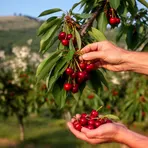
- The orchard was filled with Prunus avium trees, their branches heavy with ripening cherries.
Examples
-
Farmers cultivate Prunus avium for its sweet cherries.
-
The Prunus avium tree produces beautiful blossoms in spring.
-
Researchers studied the growth patterns of Prunus avium in different European climates.
-
The jam was made from fruit harvested from a wild Prunus avium specimen.
-
The orchard was filled with Prunus avium trees, their branches heavy with ripening cherries.
-
Farmers cultivate Prunus avium for its sweet cherries.
-
The jam was made from fruit harvested from a wild Prunus avium specimen.
Synonyms


 1
2.0
1
2.0
A tree that grows sweet red fruit you can eat or the fruit it makes
 1
2.9
1
2.9
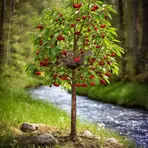
A small tree that grows in the wild and produces cherries

A small tree that grows naturally and the small tart fruit it makes
Surface Forms
Morphology
Prunus + avium
This is a Latin binomial (scientific name) rather than a compositional English phrase; a B1 learner who knows 'Prunus' only as a genus label and sees 'avium' (not a known English word) will not be able to derive the common meaning 'wild/sweet cherry'. Scientific names function as arbitrary labels and rely on specialist/Latin knowledge rather than transparent composition, so the meaning is unpredictable for general learners.
Etymology
Prunus avium comes from Latin words: Prunus means cherry and avium means 'of the birds'. Imagine birds eating the small wild cherries and spreading the seeds, and that's why the name refers to the 'wild cherry' or sweet cherry tree today.