
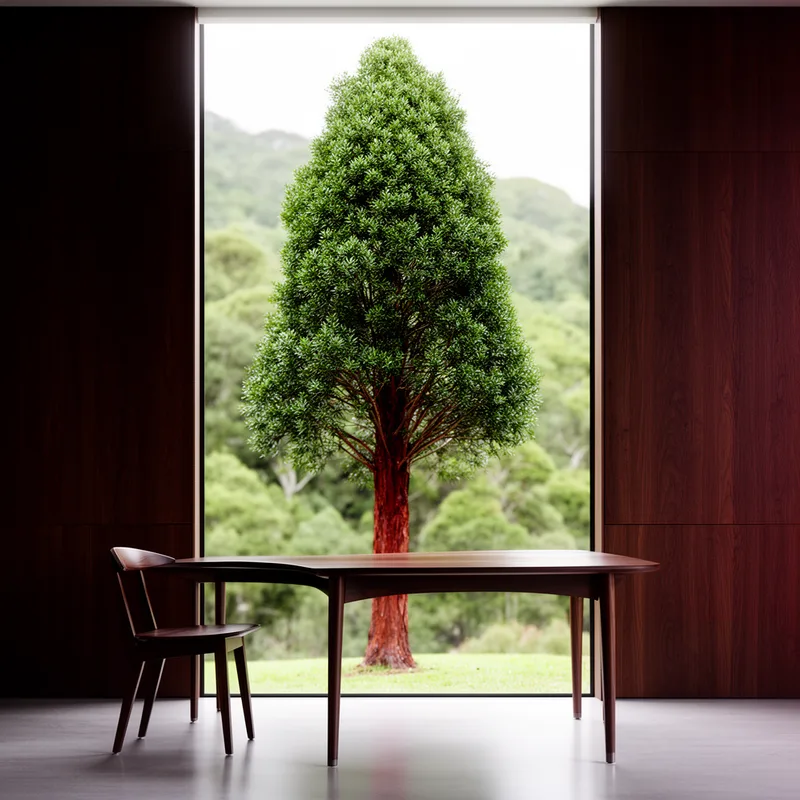
Prumnopitys ferruginea
- noun
- Specialized
- The dense timber of the Prumnopitys ferruginea is highly prized for furniture making in New Zealand.
Examples
-
Interior panelling made from Prumnopitys ferruginea adds a rich, warm tone to modern homes.
-
Conservationists are working to preserve Prumnopitys ferruginea forests due to their ecological significance.
-
The Prumnopitys ferruginea tree is known for its durability.
-
Many craftsmen prefer Prumnopitys ferruginea for its rich color.
-
The dark wood of Prumnopitys ferruginea is commonly used for high-quality furniture.
-
Craftsmen appreciate Prumnopitys ferruginea for its durability and beautiful finish in carpentry.
-
The interior design of the cabin features Prumnopitys ferruginea panelling that enhances its rustic charm.
Synonyms

 4
9.9
4
9.9

A large evergreen tree from New Zealand with dark wood used for furniture

A New Zealand evergreen tree with dark, strong wood used for furniture and indoor building
Surface Forms
Morphology
Prumnopitys + ferruginea
This is a Latin binomial scientific name functioning as an arbitrary proper noun for a specific tree species, so its meaning ('a New Zealand coniferous tree') is not compositionally derived from the parts. The constituents are taxonomic/Latin forms (one undefined here) that B1 learners would not reliably interpret (even if 'ferruginea' relates to 'ferruginous'), so the name is not transparently understandable from its elements.
Etymology
Prumnopitys ferruginea comes from old Latin words: Prumnopitys names a kind of tree and ferruginea means 'rust-coloured', like brown-red wood. That image of a dark, reddish tree helps explain why this name fits the New Zealand conifer valued for its rich timber used in interior panelling and furniture.