
Provençal


 1
9.9
- noun
- /ˌprɒvənˈsɑːl/
- Thus, for Van Gogh, the olive tree could evoke the spiritual meaning of personal struggle, as well as embody the tenacity of traditional Provençal (agricultural) culture.
- Provençal dialect
- Provençal style
- Provençal herbs
Examples
-
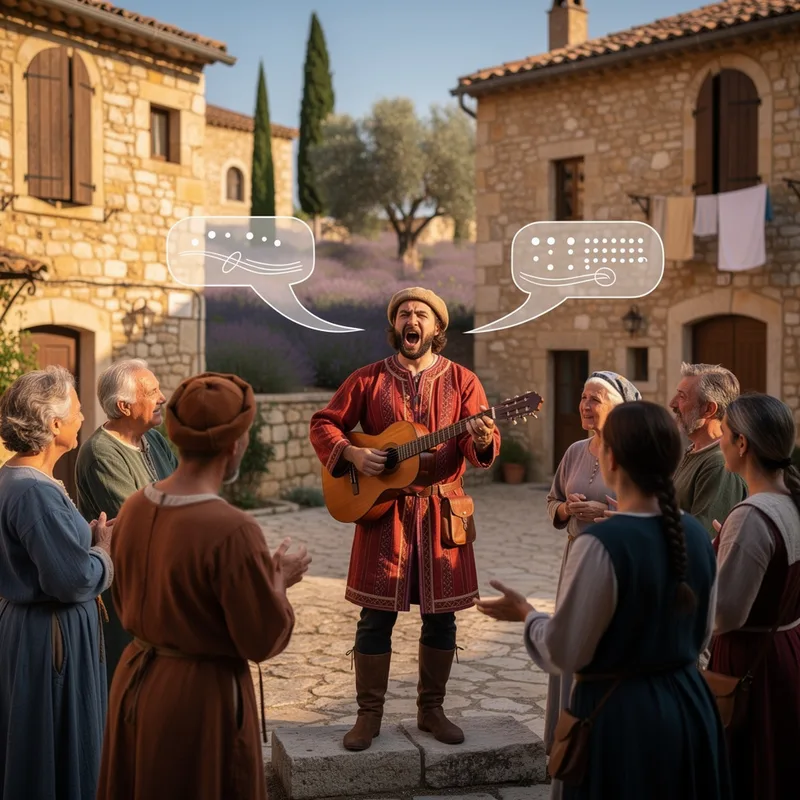
During the medieval period, many poets wrote in Provençal, a dialect of the Occitan language.
-
The Provençal dialect is still spoken by some locals in the southern regions of France today.
-
Wine, cocktails, and eight years of Provençal-inspired charm.
Blog text (8) -
Papa speaks Provençal.
-
For them, olive and cypress were rich symbols, as much as the songs of the troubadours, poems in Provençal, and classical ruins.
Academic text (1993) -
A few of Italy's wolves have moved on to colonize the Provençal Alps of southeastern France.
Academic text (1996) -
In his Provençal landscapes from St.-Rémy, the cypresses do indeed function as rustic and natural obelisks.
Academic text (1993) -
Both Mason and Michelle are half Italian, and though the culture "is a huge part" of them, they forwent their interest in Italian cuisine and maintained the Provençal-inspired place Day had created.
Blog text (8) -
These writers and men of letters, most notably Frederic Mistral, author of Mireio, had emerged in the 1850s to champion Provençal language and traditional culture.
Academic text (1993) -
After dinner, she went upstairs, bathed again slowly in the circular bath with its Provençal sprigged curtains, put on the pleated nightdress, and slept.
Fiction book (1998)
Synonyms
 1
9.9
A language like French spoken in southern France
Surface Forms
Morphology
Etymology
Provençal comes from the place name Provence, which comes from the Latin provincia meaning 'province' or 'territory'. So Provençal simply names the local language or dialect 'from Provence', the southern French region where those varieties were spoken.