
Prototheria
- noun
- /ˌproʊtəˈθɪəriə/
- Archaic
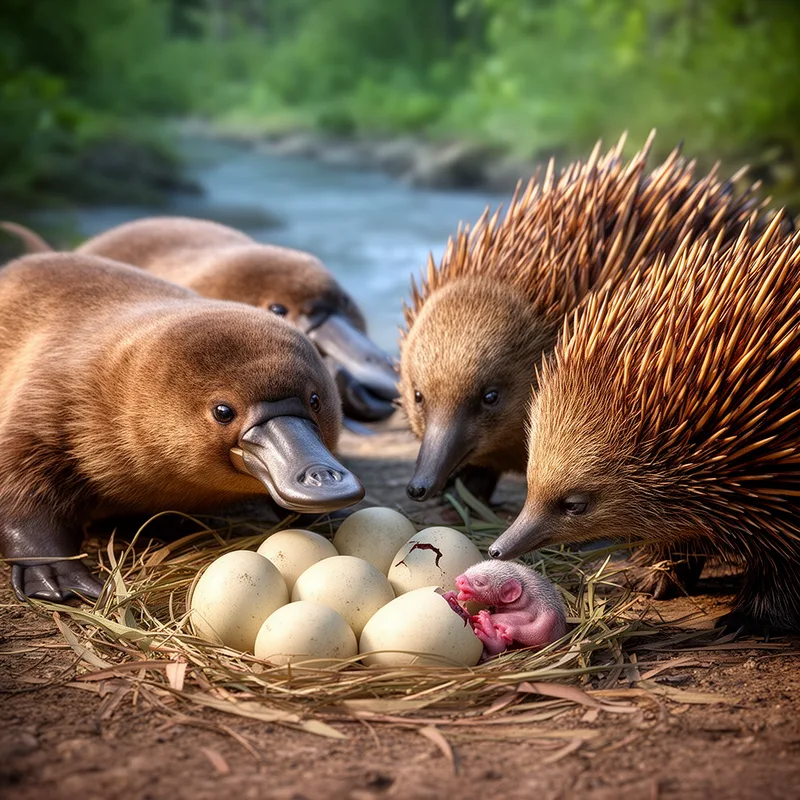
- The platypus and echidnas are classified in Prototheria because they lay eggs instead of giving birth to live young.
Examples
-
Unlike marsupials and placental mammals, Prototheria species have a cloaca for reproduction and excretion.
-
Scientists study the unique features of Prototheria to understand early mammalian evolution.
-
The Prototheria are fascinating creatures.
-
Did you know that Prototheria includes the platypus?
-
Scientists study the unique features of Prototheria to understand early mammalian evolution.
-
The platypus and echidnas are classified in Prototheria because they lay eggs instead of giving birth to live young.
-
Unlike marsupials and placental mammals, Prototheria species have a cloaca for reproduction and excretion.
Synonyms
Mammals that lay eggs instead of giving birth, like the platypus and echidnas

A group of egg-laying mammals like the platypus and echidnas
Surface Forms
Morphology
Prototheria = Theria (opaque) = proto + theria
The base term Theria is a specialized zoological label, so adding proto- does not make the meaning of this taxon transparent to most learners.
Etymology
The word Prototheria comes from Greek parts proto- meaning 'first' and -theria from therion meaning 'beast', just like proto- in prototype means 'first'. So Prototheria means 'first beasts', which helps remember that this group are early mammals that lay eggs, like the platypus and echidnas.

